
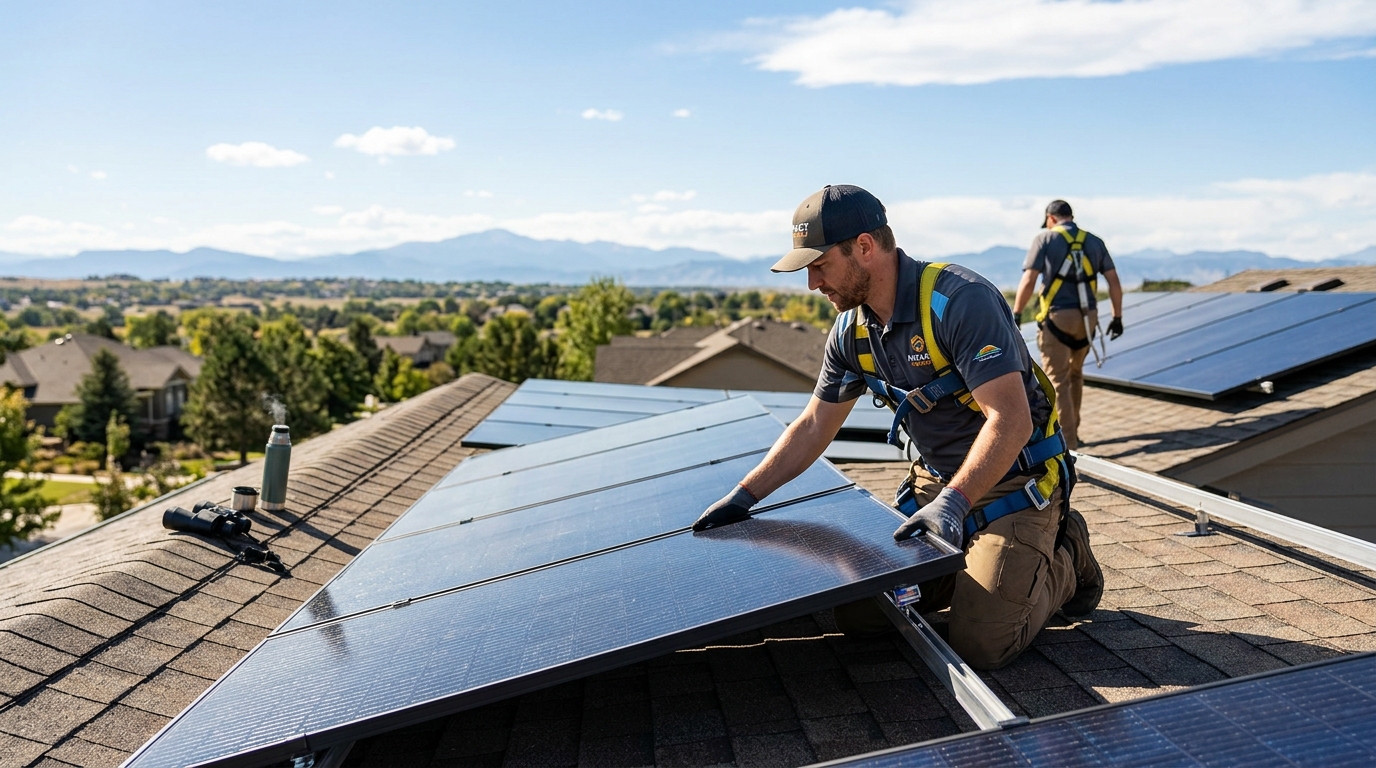
Installing American-Made Solar Panels: The Definitive 30-Year Warranty Guide
Switching to solar energy is one of the most significant investments a homeowner can make. According to the U.S. Department of Energy, solar power systems can reduce electricity bills by 50 to 90 percent depending on location and system size. However, the longevity of that investment hinges entirely on the quality of the hardware and the integrity of the installation process. Choosing American-made solar panels with a robust 30-year warranty provides a layer of financial security and performance assurance that imported alternatives often struggle to match. This guide details the precise steps to ensure your solar array delivers peak efficiency for decades.
Why Choose American-Made Solar Panels?
The solar industry has seen a massive shift toward domestic manufacturing in recent years. American-made solar panels are not just a patriotic choice; they are a strategic decision for long-term reliability. These panels are built to withstand rigorous environmental standards and are subject to strict quality control protocols that are often less consistent in overseas manufacturing hubs.
One of the primary advantages of domestic panels is supply chain resilience. When you partner with a local solar installer like Impact Energy, you are supporting a business model that prioritizes direct oversight. We do not subcontract our installation teams. This means every technician who touches your roof is trained, certified, and accountable to our specific standards. This direct line of responsibility is crucial when discussing warranty claims and long-term maintenance.
Furthermore, American manufacturing often utilizes higher-grade silicon and more durable encapsulation materials. This results in panels that degrade more slowly over time. While many standard panels lose 0.5 to 0.7 percent of their efficiency annually, premium domestic panels often maintain a lower degradation rate, ensuring you harvest more electricity in year 20 than in year 1.
Understanding the 30-Year Warranty Structure
A "30-year warranty" is a broad term that requires careful dissection. It typically consists of two distinct components: the Product Warranty and the Performance Warranty. Confusing these two is a common mistake that leads to unexpected costs down the line.
Product Warranty covers physical defects. If a panel cracks due to manufacturing errors, or if the frame corrodes prematurely, the manufacturer replaces the hardware. This is usually a pro-rata warranty, meaning the coverage value decreases over time.
Performance Warranty guarantees the power output. It states that the panel will produce at least 80 to 85 percent of its original rated capacity after 30 years. If the panel falls below this threshold, the manufacturer compensates you for the lost energy production. This is the metric that truly matters for your return on investment.
When you install through Impact Energy, we ensure that these warranties are properly registered and that you have clear documentation. We also provide a workmanship warranty on the installation itself. This covers any leaks or structural issues arising from the mounting process, bridging the gap between the hardware manufacturer and the roof integrity.
The Installation Workflow
Installing solar panels is not a DIY project. It requires precise engineering to ensure the system interacts safely with your home's electrical grid. The process begins with a comprehensive site assessment. Our engineers analyze your roof's orientation, shading from nearby trees or structures, and structural load capacity.
Step 1: Engineering and Permitting
Before a single panel is ordered, we handle all necessary permits. In Colorado, local building codes are strict regarding wind uplift and snow load requirements. American-made panels are often engineered to meet these high-altitude standards more effectively than lighter, cheaper imports. We submit detailed engineering drawings to your local municipality to ensure compliance.
Step 2: Mounting and Racking
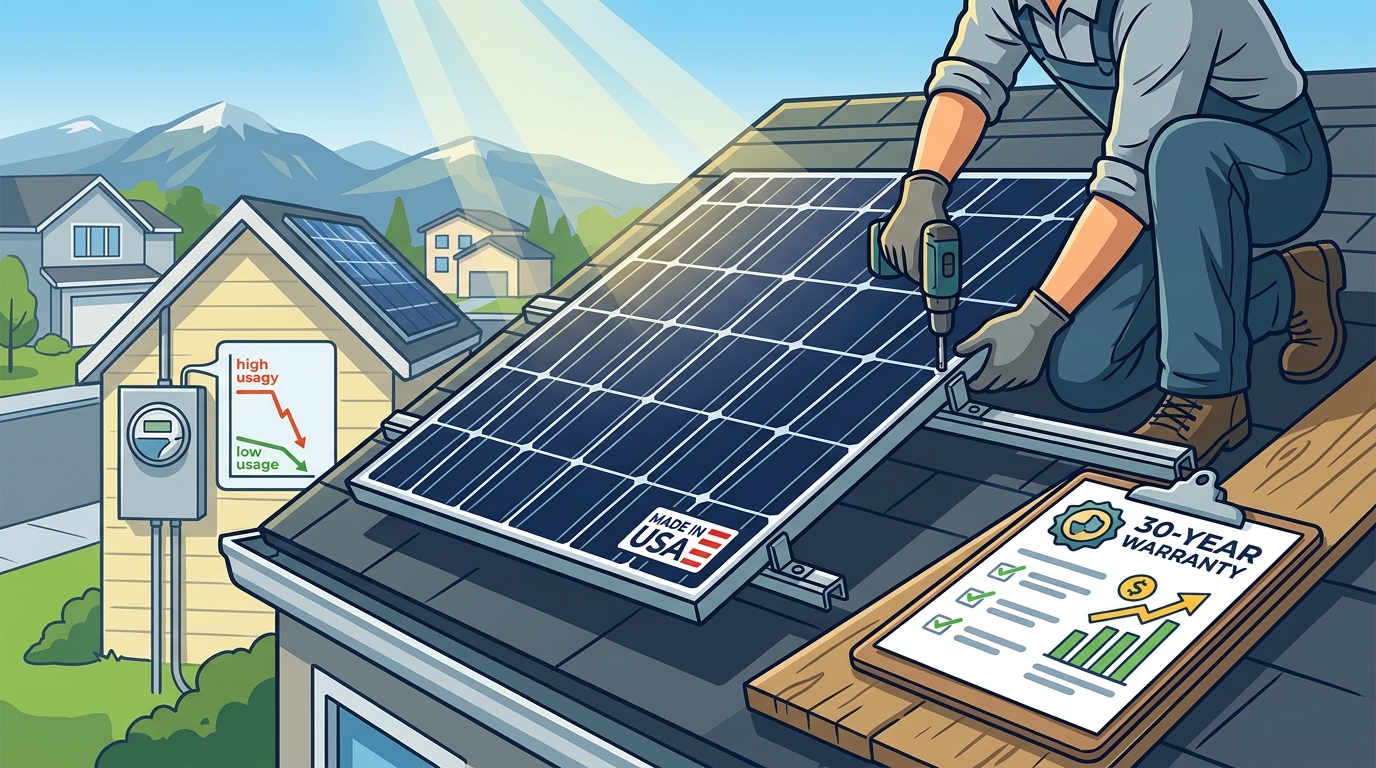
The racking system is the skeleton of your solar array. It must be anchored directly into the roof's rafters, not just the shingles. We use corrosion-resistant aluminum rails that are designed to last as long as the panels themselves. This step is critical for preventing roof leaks and ensuring the system remains secure during severe storms.
Step 3: Electrical Integration
The heart of the system is the inverter. We install high-efficiency inverters that convert the direct current (DC) from the panels into alternating current (AC) for your home. We also integrate monitoring systems that allow you to track your energy production in real-time via a mobile app. This data is vital for verifying that your system is meeting the performance guarantees outlined in your warranty.
For those interested in the financial side of this transition, exploring Colorado solar loans can help manage the upfront costs while you begin saving on electricity immediately.
Comparing Panel Technologies
Not all American-made panels are identical. Understanding the difference between monocrystalline and polycrystalline technologies is essential for making an informed decision. Monocrystalline panels are made from single-crystal silicon, offering higher efficiency and a sleek, uniform black appearance. Polycrystalline panels are made from melted silicon fragments, offering a lower cost but slightly lower efficiency.
| Feature | Monocrystalline Panels | Panocrystalline Panels |
|---|---|---|
| Efficiency | High (20-22%) | Moderate (15-17%) |
| Space Requirement | Less space needed | More space needed |
| Aesthetics | Uniform black look | Blue, speckled look |
| Temperature Coefficient | Performs better in heat | Standard performance |
For most residential installations in Denver and surrounding areas, monocrystalline panels are the superior choice. They maximize energy production on limited roof space and perform better during the hot summer months common in Colorado.
Key Takeaways
- Domestic Manufacturing Quality: American-made panels adhere to strict quality control standards, resulting in lower degradation rates and longer lifespans.
- Warranty Distinction: Always distinguish between the product warranty (hardware defects) and the performance warranty (power output guarantees).
- In-House Installation: Choosing a company like Impact Energy ensures no subcontractors are used, guaranteeing accountability and higher installation standards.
- Local Code Compliance: Proper permitting and engineering are essential for meeting Colorado's specific wind and snow load requirements.
- Financial Incentives: Utilizing federal tax credits and local solar incentives can significantly reduce the net cost of your system.
- Monitoring Systems: Real-time monitoring is crucial for verifying that your system meets the 30-year performance guarantees.
Frequently Asked Questions
What is the difference between a product warranty and a performance warranty?
A product warranty covers physical defects such as cracking or delamination of the panel. A performance warranty guarantees that the panel will produce a certain percentage of its original power output over time, typically 80 percent after 30 years.
Do American-made solar panels cost more than imported ones?
While the upfront cost may be slightly higher, the total cost of ownership is often lower due to higher efficiency, better durability, and stronger warranty support. The long-term energy production justifies the initial investment.
How long does the installation process take?
A typical residential installation takes one to three days. However, the entire process from consultation to activation can take several weeks due to permitting, engineering, and utility approval timelines.
Can I install solar panels on a roof that needs repair?
No. It is critical to address any roof repairs before installing solar panels. Installing new panels on a failing roof can lead to costly removal and reinstallation later. We offer roofing services to ensure your roof is in perfect condition before we begin.
What happens if my solar panels are damaged by hail?
Most American-made panels are tested to withstand hail impacts of up to 1 inch in diameter at high speeds. If damage occurs due to a manufacturing defect, the product warranty covers replacement. However, hail damage is often covered by homeowners insurance rather than the solar warranty.
Do I need a battery to store solar energy?
While not strictly required, adding a solar battery allows you to store excess energy for use during power outages or at night, increasing your energy independence.
Start Your Solar Journey Today
Investing in American-made solar panels with a 30-year warranty is a decision that pays dividends for decades. By choosing a reputable, locally owned installer, you ensure that your system is engineered, permitted, and installed to the highest standards. We invite you to contact Impact Energy to schedule your free savings report and discover how much you can save by switching to clean, sustainable energy.