

Electric utility rates in Colorado have climbed significantly over the last decade, driven by infrastructure upgrades and fluctuating fuel costs. According to data from the U.S. Energy Information Administration, residential electricity prices in the West have seen consistent year-over-year increases, often outpacing general inflation. For homeowners in Centennial, Aurora, and Denver, this trend means that traditional grid reliance is becoming a financial liability rather than a utility convenience. Understanding the mechanics behind these hikes is the first step toward regaining control of your household budget. (Expert HVAC Services in)
Understanding the Causes of Rising Utility Costs
The primary driver behind increasing monthly electric bills is the structural shift in how utilities recover costs. Traditional utility models rely heavily on capital expenditures for grid maintenance, transmission lines, and emergency response systems. When these costs rise, utilities pass them directly to consumers through base rate adjustments. This mechanism is often invisible until the bill arrives, leaving homeowners with little recourse to prevent the increase.
Additionally, fuel costs play a significant role in the final price of electricity. While renewable energy sources like wind and solar have near-zero marginal fuel costs, traditional generation methods depend on natural gas and coal. Volatility in global energy markets directly impacts these fuel prices. When natural gas prices spike, utility companies adjust their rates to maintain profitability. This creates a direct link between global commodity markets and your local monthly statement.
Regulatory frameworks also influence rate structures. In many jurisdictions, utilities are allowed to earn a return on investment for every dollar spent on infrastructure. This means that as utilities invest billions in grid modernization, their approved rates increase. For a detailed look at how these financial structures operate, you can review the Colorado Solar Loans resources which often contextualize the economic benefits of moving away from these volatile models.
How Solar Locks in Your Energy Rate
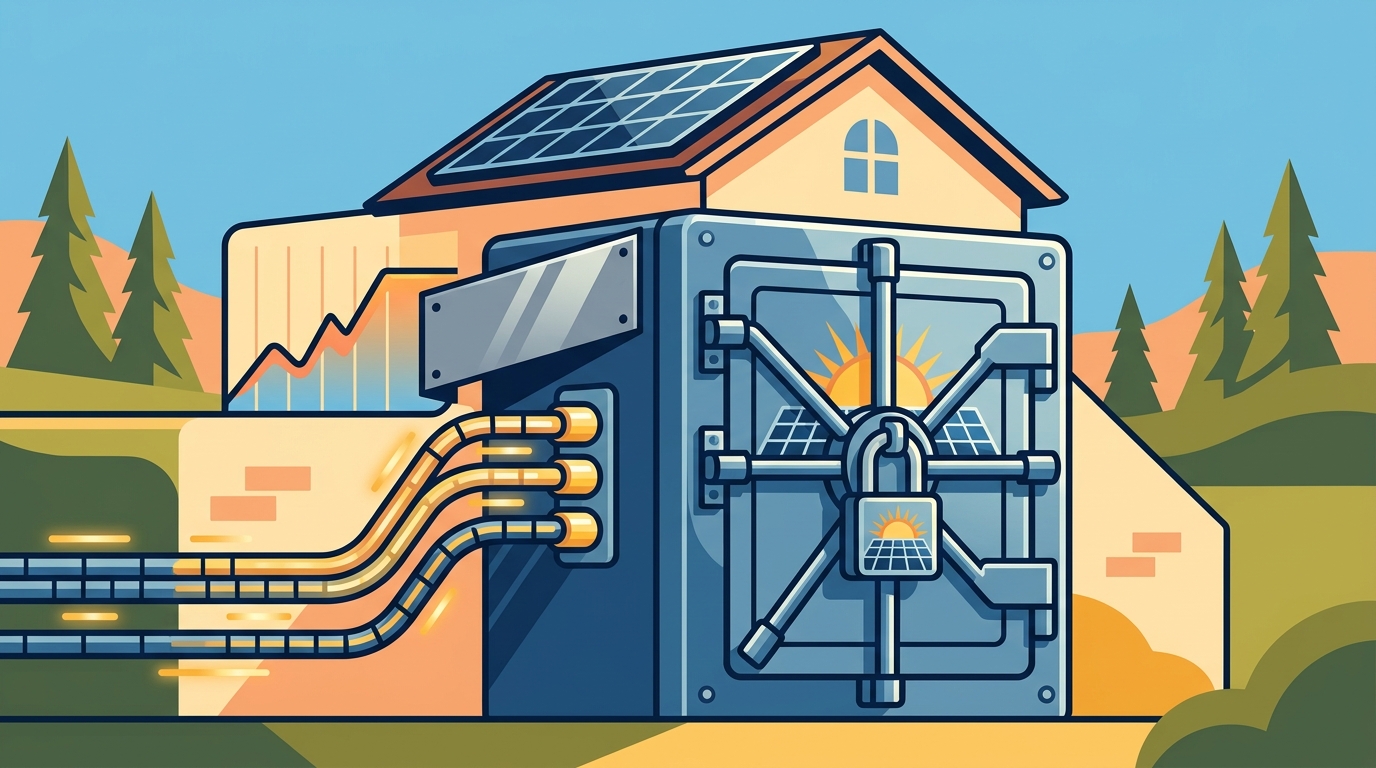
Solar energy offers a unique financial advantage: it effectively locks in your energy rate for the lifespan of the system. When you install solar panels, you are essentially pre-paying for the electricity you will generate over the next 25 years. The cost of sunlight is zero, and the maintenance costs are minimal compared to the compounding interest of utility rate hikes.
This concept is known as a fixed-levelized cost of energy. Unlike a utility bill that changes every month based on external factors, a solar system provides a predictable output. If you finance your system with a fixed-rate loan, your monthly payment remains constant. Over time, as utility rates rise, your solar payment becomes increasingly affordable in comparison. This creates a widening gap between what you pay for solar and what you would have paid for grid power.
Impact Energy specializes in designing systems that maximize this benefit. By analyzing your historical usage and local solar irradiance, we ensure your system produces enough energy to offset your grid dependency. This strategy transforms your home from a passive consumer of volatile energy into an active producer of stable power. For more insights on our approach, visit our About Us page to learn about our commitment to integrity and quality.
Comparing Grid Volatility vs. Solar Stability
To visualize the financial impact of staying on the grid versus switching to solar, consider the long-term trajectory of costs. Grid rates are projected to continue rising due to inflation and infrastructure demands. Solar costs, however, have decreased significantly over the past decade. This inverse relationship makes solar an increasingly attractive option for financial stability.
| Factor | Traditional Grid | Solar Energy System |
|---|---|---|
| Rate Stability | Highly Volatile | Fixed (via financing) |
| Fuel Cost | Fluctuating | Zero |
| Long-Term Savings | Negative | Positive |
| Control | None | Full Ownership |
This comparison highlights why homeowners are increasingly turning to renewable solutions. By eliminating fuel costs, you remove the largest variable from your energy equation. The only remaining cost is the initial investment, which can be managed through various financing options. We provide detailed Solar service information to help you understand the technical and financial aspects of this transition.
Financing Your Transition to Fixed Rates
One of the most common concerns for homeowners is the upfront cost of solar installation. However, modern financing options have made this transition more accessible than ever. Many homeowners can install solar with little to no money down. This allows them to immediately replace their volatile utility bill with a fixed, often lower, monthly loan payment.
Impact Energy offers transparent financing solutions that align with your budget. We work with reputable lenders to provide competitive rates and flexible terms. This approach ensures that your monthly solar payment is predictable and manageable. By locking in a fixed rate for your solar loan, you effectively cap your energy costs for the duration of the loan term.
For those interested in exploring specific financial pathways, our Financing page provides comprehensive details on available programs. We also offer guidance on federal and state incentives that can further reduce the net cost of your system. These incentives are designed to accelerate the return on investment and improve the overall affordability of solar energy.
Key Takeaways
- Utility rates in Colorado have risen consistently due to infrastructure and fuel costs.
- Solar energy locks in your rate by eliminating variable fuel costs.
- Fixed-rate financing allows for predictable monthly payments that often undercut utility bills.
- Impact Energy handles all permitting and installation in-house for Centennial and Denver areas.
- Financing options include low or no down payment structures to ease the transition.
- Long-term savings are maximized by avoiding compounding utility rate hikes.
- Government incentives can significantly reduce the net cost of solar installation.
Frequently Asked Questions
How much do electric bills typically increase each year?
Electric bills in Colorado have historically increased by an average of 3 to 5 percent annually, though this can vary based on regulatory decisions and fuel market conditions. This compounding effect makes long-term budgeting difficult for homeowners.
Can I really lock in a fixed rate with solar?
Yes. By financing your solar system with a fixed-rate loan, your monthly payment remains constant. Since the sun is free, your energy production cost does not rise, effectively locking in your rate for the life of the loan.
Does Impact Energy subcontract its installers?
No. Impact Energy prides itself on not subcontracting any part of the solar installation process. This ensures quality control and a better customer experience from the initial savings report to the final inspection.
What areas do you serve in Colorado?
We serve Centennial, Denver, Aurora, Lakewood, Greeley, and Pueblo. Our local expertise allows us to navigate regional regulations and maximize system performance for each specific location.
Are there upfront costs for solar installation?
While the total cost of a system exists, many financing options allow for little to no money down. This enables homeowners to start saving immediately by replacing their utility bill with a fixed loan payment.
How does solar help with budget stability?
Solar eliminates the volatility of fuel costs and utility rate hikes. By producing your own power, you gain control over your energy expenses and protect your household from external market fluctuations.
What is the lifespan of a solar panel system?
Most modern solar panels are designed to last 25 to 30 years with minimal degradation in performance. This long lifespan ensures that your fixed rate investment provides value for decades.
Secure Your Financial Future Today
Stop letting rising utility rates dictate your household budget. Switching to solar is the most effective way to lock in a fixed rate and achieve long-term financial stability. Impact Energy is ready to help you navigate this transition with expert guidance and premium installation services.
Contact us today to schedule your free savings report. Visit our Contact page or call us directly to discuss your specific needs. We look forward to helping you join the clean energy movement and take control of your energy costs.