
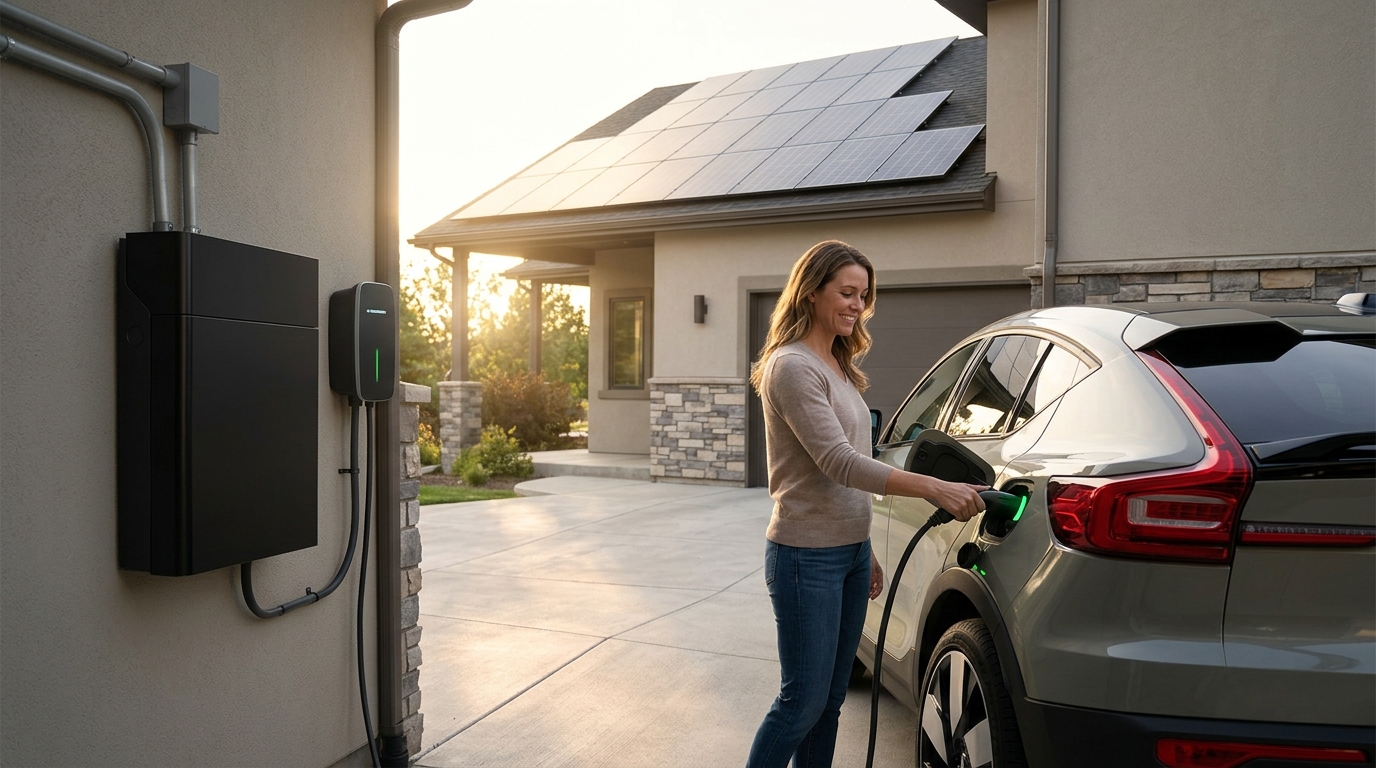
Integrating an electric vehicle charger and home battery storage with your existing solar array is one of the most effective ways to maximize energy independence. Energy storage systems are rapidly becoming standard in modern residential energy architectures. This process transforms a standard solar setup into a comprehensive power management hub. You gain control over when you generate, store, and consume electricity. The result is significantly lower utility bills and enhanced resilience during grid outages. This guide outlines the precise technical and logistical steps required to execute this upgrade safely and efficiently.
Step 1: Assess Electrical Capacity and Panel Space
Before purchasing any hardware, you must evaluate your home's electrical infrastructure. Solar installations require precise load calculations to ensure safety and efficiency. The National Renewable Energy Laboratory provides extensive data on residential energy loads. Your main electrical panel must have sufficient breaker space to accommodate new circuits for both the battery and the EV charger. If your panel is full, you may need a panel upgrade, which adds to the project timeline and cost.
Additionally, you must verify the amperage capacity of your service entrance. Most modern homes have 200-amp services, which are ideal for supporting high-draw devices like Level 2 EV chargers. If your home has a 100-amp service, adding both a battery and an EV charger might require a service upgrade. This is a critical first step because it dictates the scale of equipment you can install. Impact Energy conducts a thorough satellite and on-site assessment to determine these baseline requirements. We analyze roof pitch, azimuth, and orientation to ensure your solar array can support the additional load. Residential solar design is the foundation upon which all subsequent additions are built.
Step 2: Select the Right Battery Storage System
Battery storage is the heart of your new energy ecosystem. It allows you to store excess solar energy generated during the day for use at night or during peak pricing hours. The International Renewable Energy Agency highlights the growing role of batteries in stabilizing residential grids. When selecting a battery, consider capacity measured in kilowatt-hours (kWh) and power output measured in kilowatts (kW). A typical home battery ranges from 10 to 20 kWh, which can power essential loads for several hours during an outage.
Key factors in selection include depth of discharge, cycle life, and warranty terms. Most modern lithium-ion batteries offer over 6,000 cycles with minimal degradation. Impact Energy offers premium battery solutions that integrate seamlessly with our solar panels. We provide a ten-year workmanship warranty to cover any issues caused by our installation process. This ensures that your investment is protected long-term. Solar battery installation requires specialized knowledge of high-voltage DC systems. Our certified technicians handle all wiring and safety protocols to meet local electrical codes.
Step 3: Choose and Install the EV Charger
Level 2 EV chargers are the standard for home use, providing 240-volt power that charges vehicles significantly faster than standard outlets. The Environmental Protection Agency notes that home charging is the most convenient and cost-effective method for EV owners. You must choose a charger that matches your vehicle's onboard charger capacity. Most modern EVs accept up to 19.2 kW, but many homes install 7.2 kW or 11.5 kW units for optimal balance.
Installation involves running a dedicated circuit from your main panel or subpanel to the charging location. This location is typically a garage or a covered outdoor area. The charger must be mounted securely and protected from weather elements if installed outdoors. Impact Energy provides expert EV charger installation services that ensure proper grounding and circuit protection. We also configure the charger to communicate with your home's energy management system. This allows you to schedule charging during off-peak hours or when your solar production is highest. EV charger installation is a critical component of a holistic solar strategy.
Step 4: System Integration and Smart Configuration
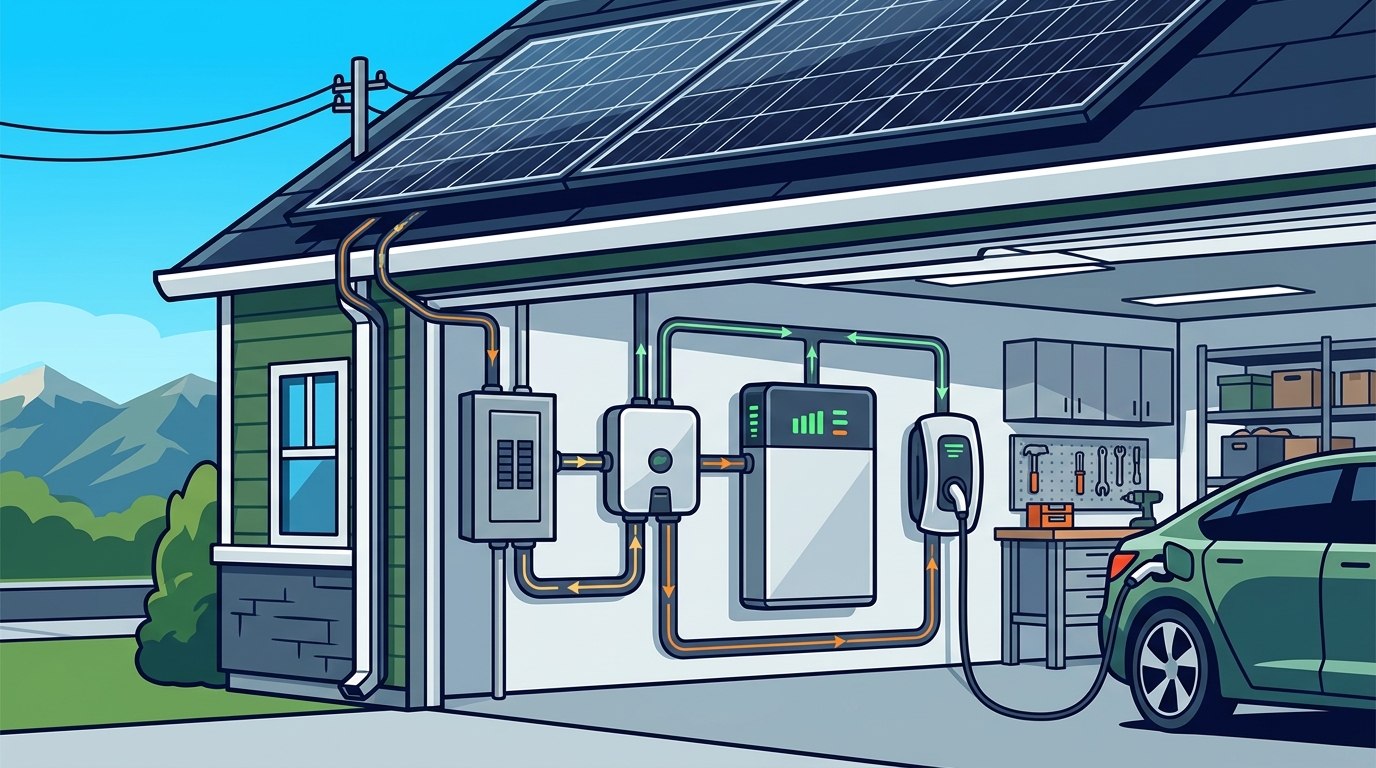
The true power of adding a battery and EV charger lies in their integration. A smart energy management system (EMS) orchestrates the flow of electricity between your solar panels, battery, EV charger, and the grid. This system uses algorithms to decide when to store energy, when to charge your car, and when to draw from the grid. Energy storage integration is key to maximizing self-consumption of solar energy. Without integration, your battery might charge from the grid during expensive peak hours, negating the benefits of solar.
Configuration involves setting preferences in the companion app. You can choose modes such as "Self-Powered," where the system prioritizes using your own solar energy, or "Backup," where the battery reserves capacity for outages. Impact Energy designs systems that optimize these flows automatically. We calculate the Total Solar Resource Fraction (TSRF) to ensure your solar array produces enough excess energy to charge both the battery and the EV. This data-driven approach ensures you get the maximum return on your investment. Commercial solar solutions often use similar integration principles scaled for larger loads.
Step 5: Financing and Incentive Optimization
Adding a battery and EV charger represents a significant capital investment. However, various financial incentives can offset the cost. The federal Investment Tax Credit (ITC) allows you to deduct a percentage of the cost of installing a solar energy system and battery storage from your federal taxes. The Inflation Reduction Act extended and expanded these tax credits through 2032. In Colorado, additional rebates and net metering policies further enhance the financial viability of these upgrades.
Impact Energy offers flexible financing options to make this upgrade accessible. We provide no upfront cost solutions and no monthly rate increases for certain solar packages. Our financing team helps you navigate the complex landscape of state and federal incentives. We ensure you claim every available credit to reduce your net project cost. Colorado solar loans are tailored to fit your budget while leveraging the value of your new energy assets. Proper financing strategy is as important as the technical installation.
Step 6: Ongoing Monitoring and Maintenance
Once your system is installed, regular monitoring ensures it operates at peak efficiency. Modern systems come with mobile apps that provide real-time data on energy production, consumption, and battery status. Energy storage monitoring helps identify potential issues before they become costly repairs. You should review your monthly energy reports to ensure your EV charging habits align with your solar production.
Physical maintenance is minimal but important. Keep the area around the battery and charger clean and free of debris. Ensure the EV charger cable is not damaged or frayed. Impact Energy offers comprehensive HVAC and solar maintenance plans to keep your entire home energy ecosystem running smoothly. Our team conducts periodic inspections to verify electrical connections and software updates. Expert HVAC services complement your solar system by ensuring your home's thermal envelope is efficient, reducing the overall load on your solar array.
Key Takeaways
- Electrical Assessment is Critical: Verify panel space and amperage before purchasing equipment to avoid costly upgrades later.
- Battery Capacity Matters: Choose a battery with sufficient kWh capacity to cover your essential loads during outages.
- Integration is Key: A smart energy management system maximizes savings by optimizing energy flow between solar, battery, and EV.
- Leverage Incentives: The federal ITC and Colorado rebates significantly reduce the net cost of battery and EV charger installations.
- Professional Installation: Certified technicians ensure safety and compliance with local electrical codes and utility requirements.
- Monitor Performance: Use mobile apps to track energy production and adjust habits for maximum efficiency.
- Long-Term Warranty: Impact Energy provides a ten-year workmanship warranty, ensuring long-term reliability and support.
Frequently Asked Questions
Can I add a battery to my existing solar system?
Yes, most modern solar inverters are compatible with battery storage systems. However, you may need a new inverter or a hybrid inverter to facilitate the connection. Impact Energy can assess your current setup to determine the best path forward.
How much does it cost to add an EV charger?
The cost varies based on the charger's power output and installation complexity. A standard Level 2 charger installation typically ranges from $1,000 to $2,500, including equipment and labor. Financing options are available to spread this cost over time.
Will a home battery work during a power outage?
Yes, if properly configured. A home battery can provide backup power to essential circuits during a grid outage. This feature is known as backup mode and is a key benefit of adding storage to your solar system.
How does solar power my EV charger?
Your solar panels generate DC electricity, which is converted to AC by your inverter. This AC power can be used directly by your EV charger. Excess power can be stored in the battery for later use by the charger. This process reduces your reliance on the grid.
What is the warranty on solar batteries?
Most premium solar batteries come with a 10-year warranty that guarantees a certain percentage of capacity retention. Impact Energy offers a ten-year workmanship warranty to cover any issues caused by our installation process.
Do I need a special permit to install an EV charger?
Yes, most jurisdictions require an electrical permit for EV charger installation. Impact Energy handles all permitting and inspection processes on your behalf, ensuring full compliance with local codes.
Start Your Energy Independence Journey Today
Adding an EV charger and battery storage to your solar system is a transformative step toward energy independence. It lowers your carbon footprint, protects you from rising utility rates, and provides peace of mind during outages. Impact Energy is your trusted partner in Centennial, CO, and across Colorado. We provide premium solar installation, battery storage, and EV charger services with integrity and expertise. Contact us today to schedule your free savings report and discover how much you can save.