
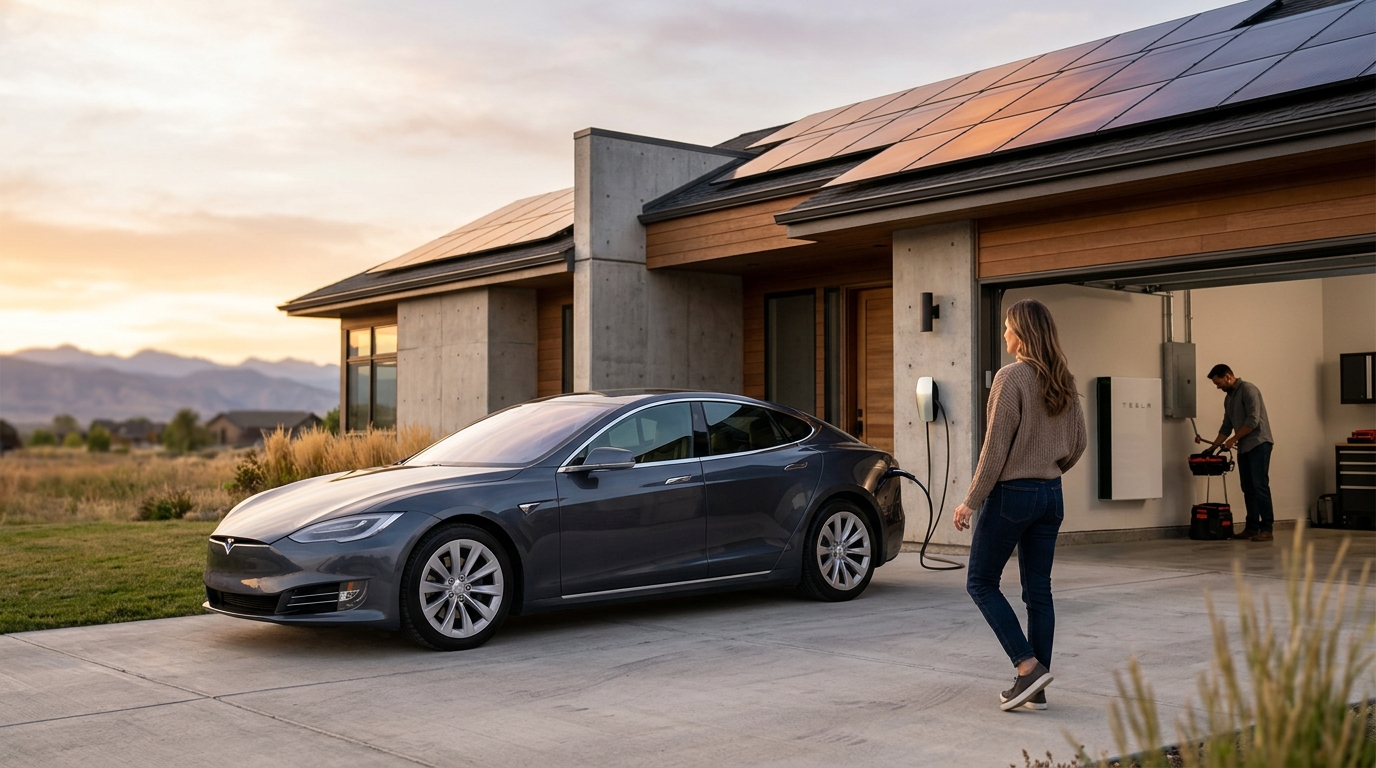
Integrating an electric vehicle charger and battery storage into your existing solar array is no longer a futuristic concept. It is a practical, immediate strategy for energy independence. According to recent industry data, homeowners who add battery storage to their solar systems can achieve energy self-sufficiency rates exceeding 70% during grid outages. This guide outlines the precise technical and logistical steps to execute this upgrade safely and efficiently.
Step 1: Assess Current Solar and Electrical Capacity
Before purchasing any hardware, you must evaluate the health and capacity of your current solar installation. Solar Battery Storage is not a universal plug-and-play device. It requires a compatible inverter and sufficient roof or ground-mounted array output to charge effectively.
Impact Energy utilizes advanced satellite imagery and shade analysis to determine the Total Solar Resource Fraction (TSRF) of your property. This initial assessment reveals if your current panel count can support both your household load and the additional demand of an EV charger. If your system is undersized, you may need to expand your array before adding storage. Our team reviews your roof pitch, azimuth, and orientation to ensure optimal performance. You can learn more about our residential solar installation process to understand how we calculate these metrics.
Additionally, your home's main electrical panel must have enough amperage to handle the new loads. An EV charger typically draws 30 to 50 amps. If your panel is near capacity, a panel upgrade may be necessary. This is a critical safety step that prevents circuit overloads and potential fire hazards.
Step 2: Select the Right Battery Storage System
Choosing the correct battery technology is the second critical step. The two primary options are Lithium-Ion and Lead-Acid batteries. Lithium-Ion batteries, specifically Lithium Iron Phosphate (LFP), are the industry standard for residential use due to their high energy density and long cycle life. Lithium-Ion batteries are rechargeable electrochemical cells that store energy through the movement of lithium ions between the anode and cathode.
When selecting a battery, consider the following factors:
- Capacity (kWh): Determines how much energy you can store. A typical home battery ranges from 10 to 20 kWh.
- Power Output (kW): Determines how many appliances you can run simultaneously.
- Depth of Discharge (DoD): The percentage of the battery that can be safely used. Most modern batteries offer 90-100% DoD.
- Warranty: Look for systems with at least a 10-year warranty on capacity retention.
Impact Energy partners with top-tier manufacturers to provide durable solar battery solutions. We ensure that the battery system is compatible with your existing solar inverter or recommend a hybrid inverter if an upgrade is needed. This compatibility check is vital for seamless operation.
Step 3: Choose and Install the EV Charger
The third step involves selecting and installing an Electric Vehicle Supply Equipment (EVSE) unit. EV chargers are categorized by levels. Level 1 chargers use a standard 120V outlet and are slow. Level 2 chargers use 240V and are the standard for home installation. EV Chargers are devices that connect an electric vehicle to a power source to recharge the battery.
For most homeowners, a Level 2 charger is the ideal choice. It provides 25 to 40 miles of range per hour of charging. Impact Energy offers a curated EV Shop featuring high-quality, smart chargers that integrate with solar systems. These smart chargers can adjust charging speed based on your solar production in real-time.
Installation requires a dedicated circuit from your main panel to the charger location. This is typically a 60-amp double-pole breaker. The charger can be installed indoors in a garage or outdoors on a wall. Weather-resistant enclosures are recommended for outdoor installations. Our certified installers ensure that all wiring meets the National Electrical Code (NEC) standards. You can view our EV charger services to see the specific models we support.
Step 4: System Integration and Smart Management
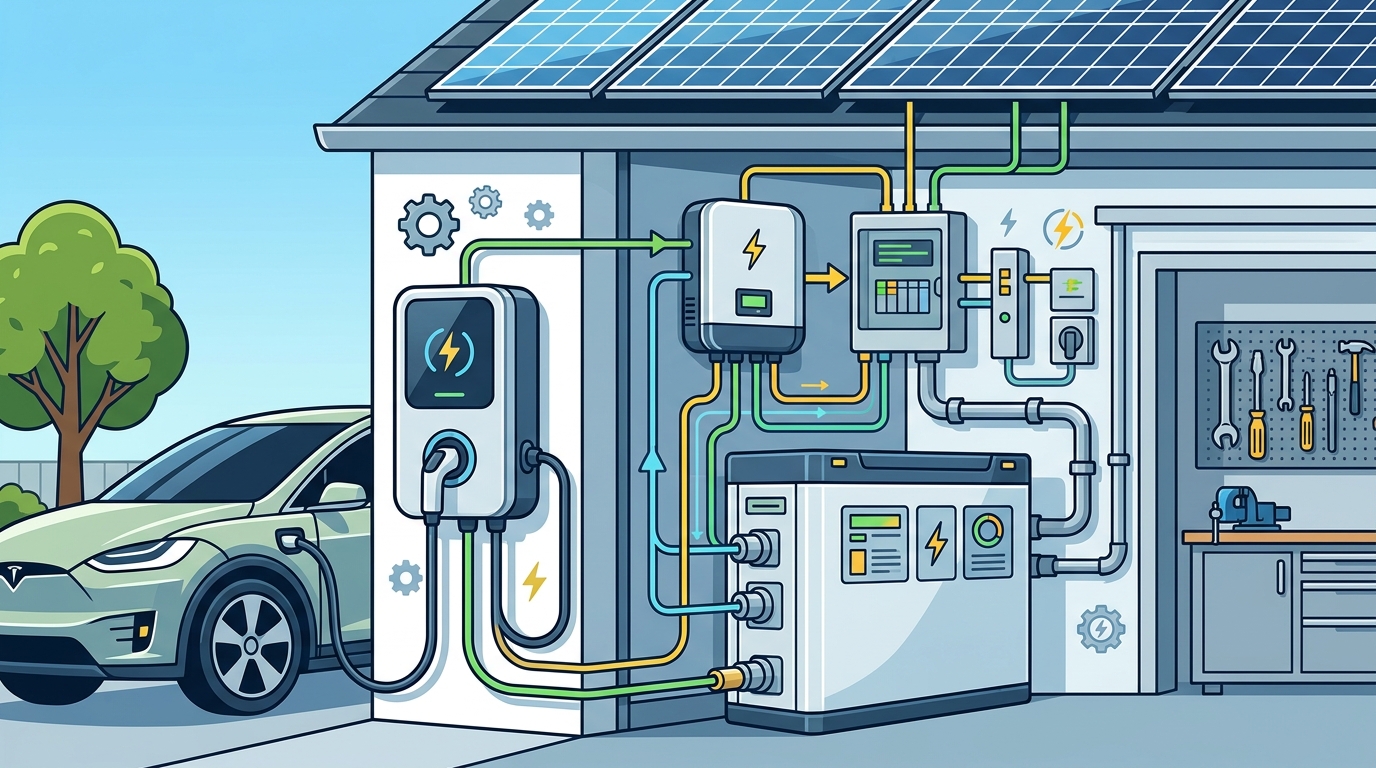
Integration is where the magic happens. You must connect the battery, the solar inverter, the EV charger, and your home's electrical panel. This is often managed by a central energy management system (EMS). The EMS dictates the flow of energy based on your settings.
There are three primary modes of operation:
- Self-Consumption: Prioritizes using solar energy for your home and EV, storing excess in the battery.
- Backup: Keeps the battery charged to power your home during grid outages.
- Time-of-Use (TOU): Charges the battery from the grid during cheap off-peak hours and discharges during expensive peak hours.
Impact Energy designs systems that allow you to switch between these modes effortlessly. Our services include the configuration of these smart controls. This ensures you are always optimizing for either cost savings or energy resilience. The integration process also involves setting up monitoring apps. These apps provide real-time data on solar production, battery status, and EV charging progress.
Step 5: Navigate Financing and Incentives
Adding an EV charger and battery storage is a significant investment. However, multiple financial incentives can reduce the net cost. The federal government offers a tax credit for residential clean energy projects. Residential Clean Energy Credit is a federal tax incentive that allows homeowners to deduct a percentage of the cost of installing qualified solar and battery systems from their federal income taxes.
In Colorado, additional incentives may be available through local utilities and state programs. Impact Energy provides detailed incentive guidance to help you maximize these savings. We also offer flexible financing options with no upfront costs for eligible customers. This makes the transition to a fully electrified home more accessible.
It is crucial to understand the interplay between these incentives. For example, the federal tax credit applies to the total installed cost, including the battery and EV charger if they are part of the same solar project. Our team handles the paperwork and compliance requirements to ensure you receive every dollar you are owed.
Step 6: Ongoing Maintenance and Monitoring
Once your system is installed, regular maintenance ensures long-term performance. Solar panels require occasional cleaning to remove dust and debris. Batteries should be monitored for temperature and charge cycles. EV chargers need periodic inspection of the cable and connector for wear and tear.
Impact Energy stands behind our work with a ten-year workmanship warranty. This covers any issues caused by our installation process. We also provide ongoing support through our contact channels. Our team is available to help you troubleshoot any issues or optimize your system settings. Regular professional inspections can identify potential problems before they become costly repairs.
Key Takeaways
- Capacity Check: Always assess your current solar array and electrical panel capacity before purchasing hardware.
- Battery Choice: Lithium-Ion batteries are the preferred technology for residential storage due to their longevity and efficiency.
- EV Charger Level: Level 2 chargers are the standard for home use, offering significantly faster charging than Level 1.
- Smart Integration: An Energy Management System (EMS) is critical for optimizing energy flow between solar, battery, and EV.
- Financial Benefits: Federal tax credits and local incentives can substantially reduce the total cost of ownership.
- Professional Installation: Certified installers ensure safety, code compliance, and warranty validity.
- Ongoing Support: Regular monitoring and maintenance are essential for maximizing system lifespan and performance.
Frequently Asked Questions
Can I add a battery to my existing solar system?
Yes, you can add a battery to an existing solar system. However, it depends on the compatibility of your current inverter. If your inverter is not compatible, you may need to replace it with a hybrid inverter. Impact Energy can assess your current setup to determine the best path forward.
How much does it cost to install an EV charger and battery?
The cost varies based on the size of the battery and the type of EV charger. However, with federal tax credits and local incentives, the net cost can be significantly reduced. Impact Energy offers no upfront cost financing options to make this upgrade affordable.
Will the battery power my EV charger during an outage?
Yes, if your battery system is configured for backup power. You can set the system to prioritize charging your EV from solar or battery energy during an outage. This ensures you have a reliable power source for your vehicle even when the grid is down.
Do I need a special permit to install an EV charger?
Yes, most jurisdictions require an electrical permit for EV charger installation. Impact Energy handles all necessary permitting and inspections as part of our installation process. This ensures your system is legal and safe.
How long does the battery last?
Modern lithium-ion batteries typically last 10 to 15 years. The warranty usually guarantees a certain percentage of capacity retention over this period. Impact Energy provides warranties that protect your investment for the long term.
Can I monitor my system remotely?
Yes, most modern solar and battery systems come with mobile apps. These apps allow you to monitor solar production, battery status, and EV charging progress from anywhere. Impact Energy sets up these monitoring systems for all our clients.
What is the difference between a hybrid inverter and a microinverter?
A hybrid inverter can manage both solar and battery storage. A microinverter converts DC to AC at the panel level and typically does not support battery storage without additional equipment. Impact Energy can help you determine which inverter type is best for your upgrade.
Ready to Upgrade Your Home Energy System?
Adding an EV charger and battery storage to your home solar system is a powerful step toward energy independence. It reduces your reliance on the grid, lowers your carbon footprint, and provides peace of mind during outages. Impact Energy is here to guide you through every step of the process.
Our team of experts is ready to assess your property, design a custom solution, and handle all installation details. We serve homeowners in Centennial, Denver, Aurora, and surrounding areas. Contact us today to schedule your free consultation and start saving.
Contact Impact Energy to book your appointment and take the first step toward a cleaner, more resilient home.