

Why Are My Electric Bills Increasing and How Can I Lock in a Fixed Rate?
Utility rates across the United States have reached historic highs, creating significant financial strain for homeowners. According to the U.S. Energy Information Administration, average residential electricity prices rose by nearly 5% in 2023 alone, with regional spikes exceeding 10% in states with heavy reliance on natural gas generation. This volatility is not a temporary anomaly but a structural shift in energy markets. For homeowners in Colorado, this means that traditional grid power is becoming an increasingly unreliable budgeting tool. The solution lies in shifting from a variable-cost model to a fixed-rate asset, primarily through solar energy systems. (About Us Impact Energy)
Understanding the Causes of Rate Hikes
Electric bills are increasing due to a combination of infrastructure aging, fuel price volatility, and regulatory changes. Traditional utilities must constantly upgrade aging grids to handle extreme weather events and increased demand from electric vehicles. These capital expenditures are passed directly to consumers through monthly rate adjustments. (Solar Installation in Denver)
In Colorado, the climate plays a dual role. While the state has abundant sunshine, the winter months often require peak heating loads. When natural gas prices spike, utilities often adjust their rates to cover the cost of generation. This creates a direct correlation between global energy markets and your monthly household budget. Unlike a mortgage or a car payment, your electric bill has no ceiling. It can rise indefinitely based on market forces beyond your control.
Another critical factor is the loss of economies of scale in traditional power generation. As more consumers seek independence, the fixed costs of maintaining the grid are distributed among fewer active payers, further driving up the per-kilowatt-hour price for remaining customers. This creates a feedback loop where the more people try to reduce usage, the more expensive the remaining usage becomes.
Solar as a Fixed-Rate Alternative
Solar energy is the most effective mechanism for locking in a fixed electricity rate. When you install a solar panel system, you are essentially pre-paying for the energy your home will produce over the next 25 to 30 years. The cost of sunlight is zero. Therefore, the only variable in your equation is the upfront cost of the system and the financing terms, which are fixed at the time of contract signing.
By generating your own power, you insulate yourself from utility rate hikes. If your utility company raises rates by 8% next year, your solar system’s cost remains unchanged. This creates a widening gap between what you pay for solar and what your neighbors pay for grid power, effectively increasing your savings every year. This is known as the "solar premium" or "rate arbitrage."
Furthermore, modern solar systems are not just about panels. Solar batteries allow you to store excess energy generated during the day for use at night or during grid outages. This maximizes self-consumption and reduces reliance on the grid during peak pricing hours, further stabilizing your energy costs.
The Impact Energy Installation Process
Transitioning to a fixed-rate energy model requires a partner who understands the local regulatory landscape and technical requirements. Impact Energy operates as a full-service provider in Centennial, Denver, and surrounding Colorado areas. We do not subcontract our installation teams, which ensures quality control and accountability from the initial design to the final inspection.
Step 1: Satellite Imagery and Shade Analysis
The process begins with a detailed assessment of your property. We utilize advanced satellite imagery to analyze your roof’s pitch, azimuth, and orientation. This data allows us to calculate the Total Solar Resource Fraction (TSRF) for your specific location. We also conduct shade analysis to identify potential obstructions like trees or neighboring buildings that could impact sunlight exposure.
Step 2: Custom Design and Proposal
Based on the assessment, our engineering team designs a system tailored to your energy consumption history. We provide a clear proposal outlining the system layout, estimated energy production, and cost. This transparency ensures you know exactly what to expect before any work begins.
Step 3: Installation and Activation
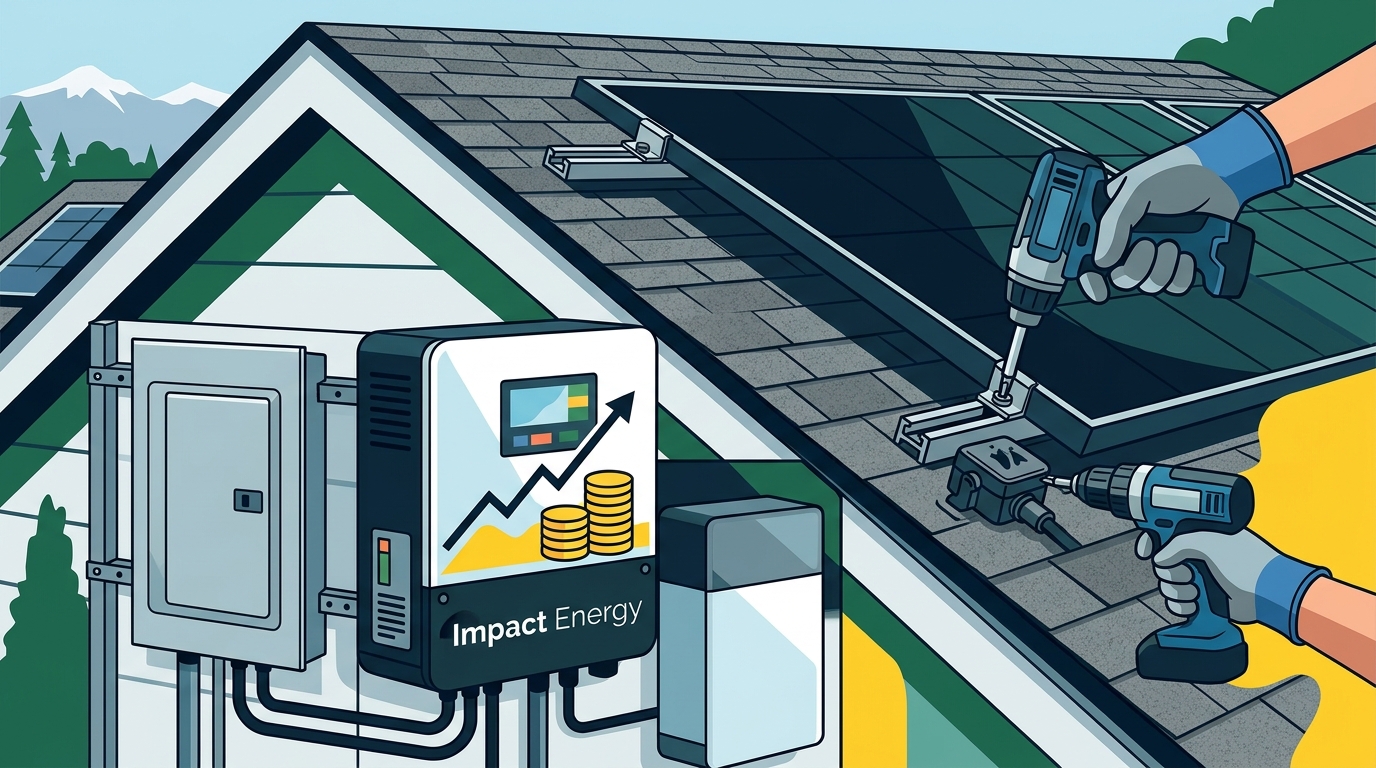
Once you approve the proposal, our in-house installation team brings the project to life. We handle all necessary permits and coordinate with building inspections. After a seamless installation, we conduct a final inspection and activate your system. You can immediately start enjoying energy savings from day one.
Financing and Incentive Breakdown
One of the primary concerns for homeowners is the upfront cost. However, Impact Energy offers financing options that allow you to switch to solar with no upfront cost. This means you can lock in a fixed rate for your energy production without depleting your savings.
Additionally, federal and state incentives play a crucial role in reducing the net cost of your system. The Federal Investment Tax Credit (ITC) allows homeowners to deduct a significant percentage of the cost of installing a solar energy system from their federal taxes. Colorado also offers various net metering policies that credit homeowners for excess energy sent back to the grid.
| Feature | Traditional Utility Grid | Impact Energy Solar System |
|---|---|---|
| Rate Stability | Variable (Subject to hikes) | Fixed (Locked at installation) |
| Upfront Cost | None (Pay as you go) | Financing Available (No upfront) |
| Warranty | N/A | 30-Year Product Warranty |
| Workmanship | N/A | 10-Year Workmanship Warranty |
| Energy Independence | Low | High (With Battery Option) |
Key Takeaways
- Rate Volatility: Utility rates are rising due to infrastructure costs and fuel price fluctuations, making budgeting difficult.
- Fixed Rate Solution: Solar panels lock in your energy cost at the time of installation, protecting you from future hikes.
- In-House Quality: Impact Energy uses no subcontractors, ensuring a 10-year workmanship warranty on all installations.
- Financing Options: You can switch to solar with no upfront cost through various financing packages.
- Local Expertise: We serve Centennial, Denver, Aurora, Greeley, Lakewood, and Pueblo with specialized local knowledge.
- Battery Integration: Adding a solar battery maximizes self-consumption and provides backup power during outages.
- Long-Term Savings: With a 30-year product warranty, your system continues to pay for itself for decades.
Frequently Asked Questions
How much can I save by switching to solar?
Savings vary based on your current electricity usage and local utility rates. However, most homeowners in Colorado see a significant reduction in their monthly bills, often eliminating them entirely. The exact savings are calculated during your personalized proposal.
Does Impact Energy subcontract its installers?
No. Impact Energy is committed to integrity and quality. We do not subcontract any part of the solar installation process. Our in-house team handles every step, ensuring better customer service and higher quality work.
What areas do you serve in Colorado?
We provide solar installation services in Centennial, Denver, Aurora, Greeley, Lakewood, Pueblo, and Colorado Springs. Our team is locally owned and understands the specific regulatory requirements for each area.
Are there upfront costs for solar installation?
Impact Energy offers financing options that allow you to start saving with no upfront cost. We also provide detailed information on available incentives and tax credits to help reduce the net price of your system.
How long does the installation process take?
The timeline depends on the size of the system and local permitting requirements. Generally, the physical installation takes a few days, but the entire process from design to activation can take several weeks due to permit approvals and utility coordination.
What happens if my roof needs repairs?
We conduct a thorough roof assessment before installation. If repairs are needed, we can coordinate with our roofing services to ensure your roof is in optimal condition before installing your solar panels.
Do solar panels work in cloudy weather?
Yes. While solar panels are most efficient in direct sunlight, they still generate electricity on cloudy days. Colorado’s high altitude and abundant sunshine make it an ideal location for solar energy production.
Start Saving Today
Stop letting utility rate hikes dictate your household budget. Take control of your energy future by switching to a fixed-rate solar system. Contact Impact Energy today to schedule your free savings report and discover how much you can save.
Click here to contact Impact Energy and start your journey to energy independence.