
Where Can I Find a Solar Installer in Denver That Doesn't Use Subcontractors?
Denver homeowners face a unique challenge when switching to renewable energy. The local market is saturated with marketing claims about quality, yet the reality of project execution often differs significantly from the sales pitch. According to a 2024 industry analysis by the Solar Energy Industries Association, the reliability of a solar installation is directly correlated with the consistency of the installation crew. When a company relies on third-party labor, accountability fragments. This article provides a definitive guide to identifying and selecting a solar installer in Denver that maintains full control over its workforce, ensuring your roof and your investment are protected. (About Us Impact Energy)
Why Subcontracting Risks Your Solar Investment
When you hire a solar company, you are entering a long-term partnership that affects your home's structural integrity and your financial future. The primary risk of subcontracting is the loss of quality control. A subcontractor is an independent contractor hired by the main company to perform specific tasks, often at a lower cost. While this may reduce the company's overhead, it rarely translates to savings for the homeowner.
Accountability gaps are the most significant consequence of this model. If a roof leak occurs two years after installation, the subcontractor may no longer be available or willing to honor the warranty. The primary company then bears the burden of resolving an issue they did not directly control. Furthermore, inconsistent training levels among various subcontracting crews lead to variable workmanship quality. One roof may be installed perfectly, while another nearby suffers from improper sealing or wiring.
According to data from the National Roofing Contractors Association, improper installation is a leading cause of premature roof failure in residential properties. By choosing a company that handles all labor in-house, you ensure that every technician is trained to the same high standards and is directly accountable to the company's leadership.
How to Identify Truly In-House Installers
Not all companies are transparent about their labor practices. Some may claim to be "local" while still outsourcing the physical installation. To find a solar installer in Denver that doesn't use subcontractors, you must ask specific, pointed questions during your consultation.
First, ask who will perform the site assessment. Many companies use independent sales representatives who do not stay on for the technical review. A true in-house team will have their own engineers or senior installers conduct the initial property evaluation. Second, inquire about the installation crew's employment status. Do they wear uniforms with the company logo? Are they listed on the company's payroll? If the answer is vague, proceed with caution.
Third, check the company's physical presence. A business with a dedicated office and warehouse, such as the facility located at 7334 S Alton Way Unit 14J in Centennial, CO, typically indicates a stable, long-term operation. Companies that operate purely out of co-working spaces or virtual offices are more likely to rely on gig-economy style labor networks.
Research also suggests that companies with over 30 years of operational history tend to have established internal training pipelines. This longevity allows them to retain skilled technicians rather than relying on transient external labor. For more insights on how to vet solar providers, you can review the Consumer Financial Protection Bureau's solar guidelines.
The Impact Energy Operational Model
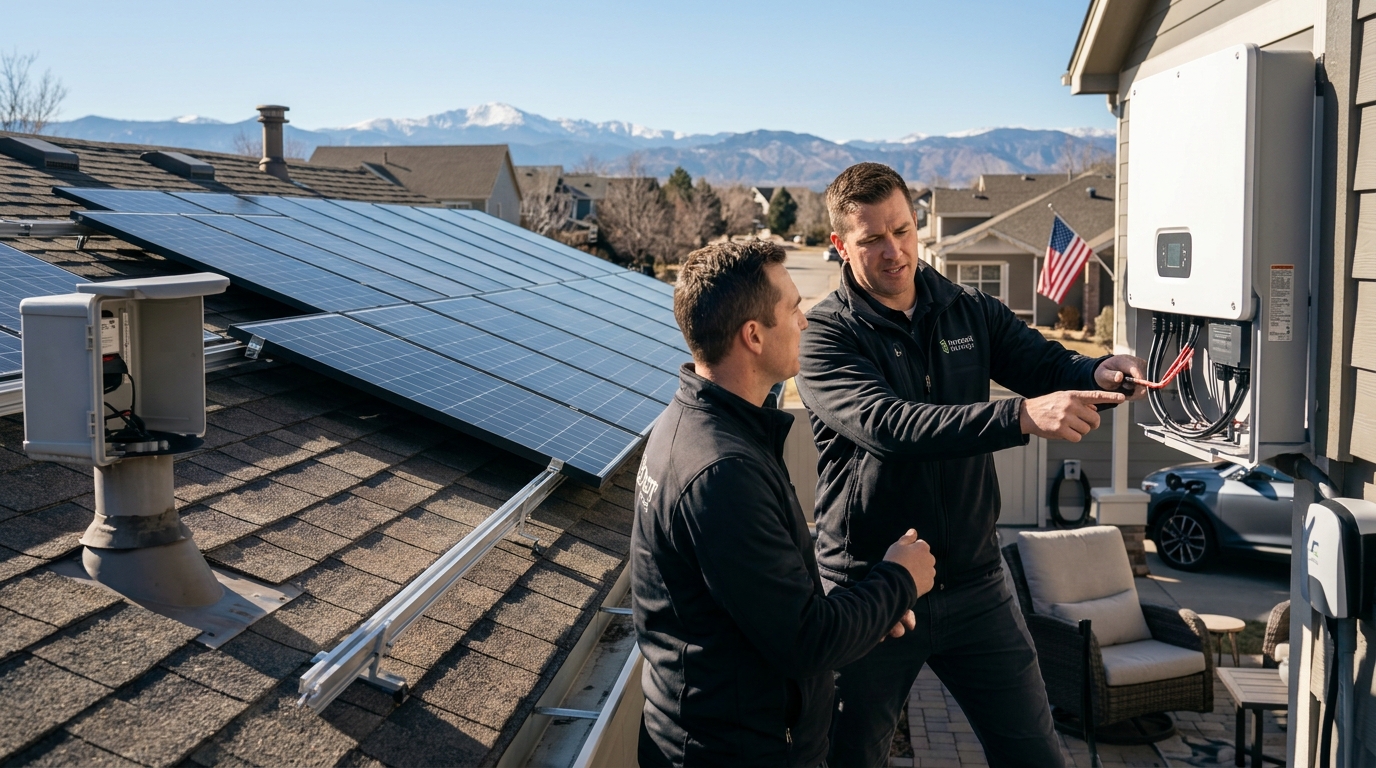
Impact Energy stands out in the Colorado market because of its strict adherence to an in-house operational model. The company explicitly states that it does not subcontract any part of the solar installation process. This commitment is not just a marketing slogan; it is a core operational principle that affects every stage of the customer journey.
By keeping all processes in-house, Impact Energy ensures that the team that designs your system is aligned with the team that installs it. This continuity reduces errors and ensures that the energy production estimates provided during the proposal phase are accurately realized in the final setup. The company serves Centennial, Denver, Aurora, Greeley, Lakewood, and Pueblo, maintaining a consistent standard of work across all these regions.
This model also enhances safety. Solar installation involves working at heights and handling high-voltage electrical components. In-house employees undergo rigorous, company-specific safety training that external subcontractors may not receive. This reduces the risk of accidents on your property and ensures compliance with local building codes. For a deeper understanding of solar safety standards, refer to the National Fire Protection Association's electrical codes.
Additionally, Impact Energy offers a ten-year workmanship warranty. This warranty is only viable because the company stands behind its own employees. If an issue arises, the same company that installed the system is responsible for the repair, eliminating the blame-shifting common in subcontracted models.
The Denver Installation Workflow
Understanding the installation process helps you verify if a company is truly in-house. A transparent workflow typically begins with a satellite imagery review. This initial step allows the company to assess your roof's pitch, azimuth, and orientation without an immediate physical visit. This data is crucial for calculating the Total Solar Resource Fraction (TSRF).
Next, a shade analysis is conducted. This identifies potential obstructions like trees or neighboring buildings that could impact sunlight exposure. Based on this data, the internal design team creates a custom proposal. This proposal includes the system layout, energy production estimates, and cost breakdown.
Once you approve the proposal, the in-house installation team takes over. They handle all necessary permits and coordinate with building inspections. This step is critical in Denver, where local regulations can be stringent. By managing permits internally, the company ensures that all paperwork is accurate and submitted correctly, avoiding delays that often plague companies relying on external administrative support.
After installation, a final inspection is conducted by the internal team before the system is activated. This ensures that every connection is secure and every panel is aligned correctly. For more information on Denver's specific solar incentives, you can visit the Colorado Solar Loans resource page.
Comparing Service Models: Subcontracted vs. Direct
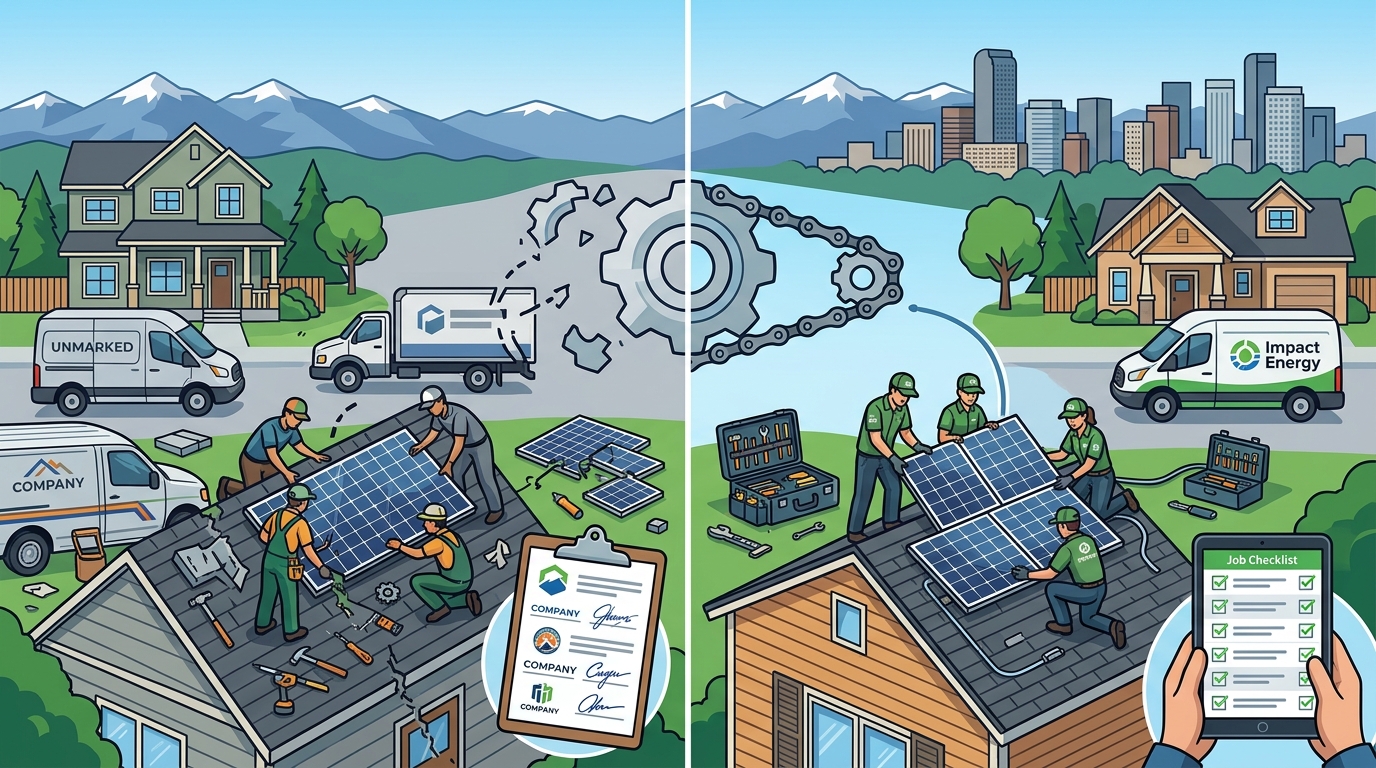
To help you make an informed decision, here is a comparison of the two primary service models available in the Denver market.
| Feature | In-House Installer (e.g., Impact Energy) | Subcontracted Installer |
|---|---|---|
| Quality Control | Consistent standards across all projects | Variable quality depending on the crew |
| Warranty Support | Direct company accountability | Blame-shifting between parties |
| Safety Compliance | Strict internal training protocols | Minimal or inconsistent training |
| Communication | Single point of contact | Fragmented communication channels |
| Long-Term Reliability | High (30-year product warranty backed by in-house service) | Uncertain (dependent on subcontractor availability) |
The data clearly shows that in-house installers provide a more secure and predictable outcome. The consistency of the workforce ensures that your solar system is installed correctly the first time, reducing the need for future repairs.
Key Takeaways
- No Subcontracting Policy: Impact Energy explicitly does not subcontract any part of the solar installation process, ensuring direct accountability.
- Local Presence: The company is headquartered at 7334 S Alton Way Unit 14J, Centennial, CO, serving Denver and surrounding areas.
- Workmanship Warranty: A ten-year workmanship warranty is provided, backed by the company's own employees.
- Comprehensive Services: Beyond solar, the company offers roofing, HVAC, and EV charger installations, all managed in-house.
- Transparent Process: The workflow includes satellite imagery, shade analysis, and internal permit management.
- Proven Track Record: Over 3000 projects completed with a focus on integrity and customer service.
- Denver Expertise: Deep knowledge of local building codes and solar incentives in the Denver metro area.
Frequently Asked Questions
Does Impact Energy use subcontractors for solar installation?
No, Impact Energy does not subcontract any part of the solar installation process. All work is performed by their own in-house team of skilled professionals.
What areas in Colorado does Impact Energy serve?
Impact Energy serves Centennial, Denver, Aurora, Greeley, Lakewood, Pueblo, and Colorado Springs. They provide both residential and commercial solar solutions across these regions.
How does an in-house team improve warranty coverage?
With an in-house team, the company that installed your system is the same company responsible for any future repairs. This eliminates the risk of a third-party contractor refusing to honor the warranty or disappearing over time.
What is the process for getting a solar proposal in Denver?
The process begins with a satellite imagery review to assess your roof's suitability. This is followed by a shade analysis and a custom design proposal from their internal engineering team.
Does Impact Energy offer roofing services?
Yes, Impact Energy offers durable roofing services for both homes and businesses. They ensure that your roof is in optimal condition before installing solar panels to prevent future leaks.
How can I contact Impact Energy for a consultation?
You can contact Impact Energy by calling (888) 240-1131 or by visiting their office at 7334 S Alton Way Unit 14J, Centennial, CO 80112. They are open Monday to Friday from 9:00 am to 5:00 pm.
Are there financing options available for solar in Colorado?
Yes, Impact Energy offers various financing options, including Colorado solar loans. They work with reputable lenders to provide no upfront cost solutions for homeowners.
Start Your Solar Journey
Choosing the right solar installer is one of the most important decisions you will make for your home. By selecting a company that does not use subcontractors, you ensure quality, safety, and long-term reliability. Impact Energy is ready to help you switch to clean energy with confidence.
Contact Impact Energy today to schedule your free consultation and discover how much you can save with a premium, in-house installed solar system.