
How to Add an EV Charger and Battery Storage to Your Home Solar System
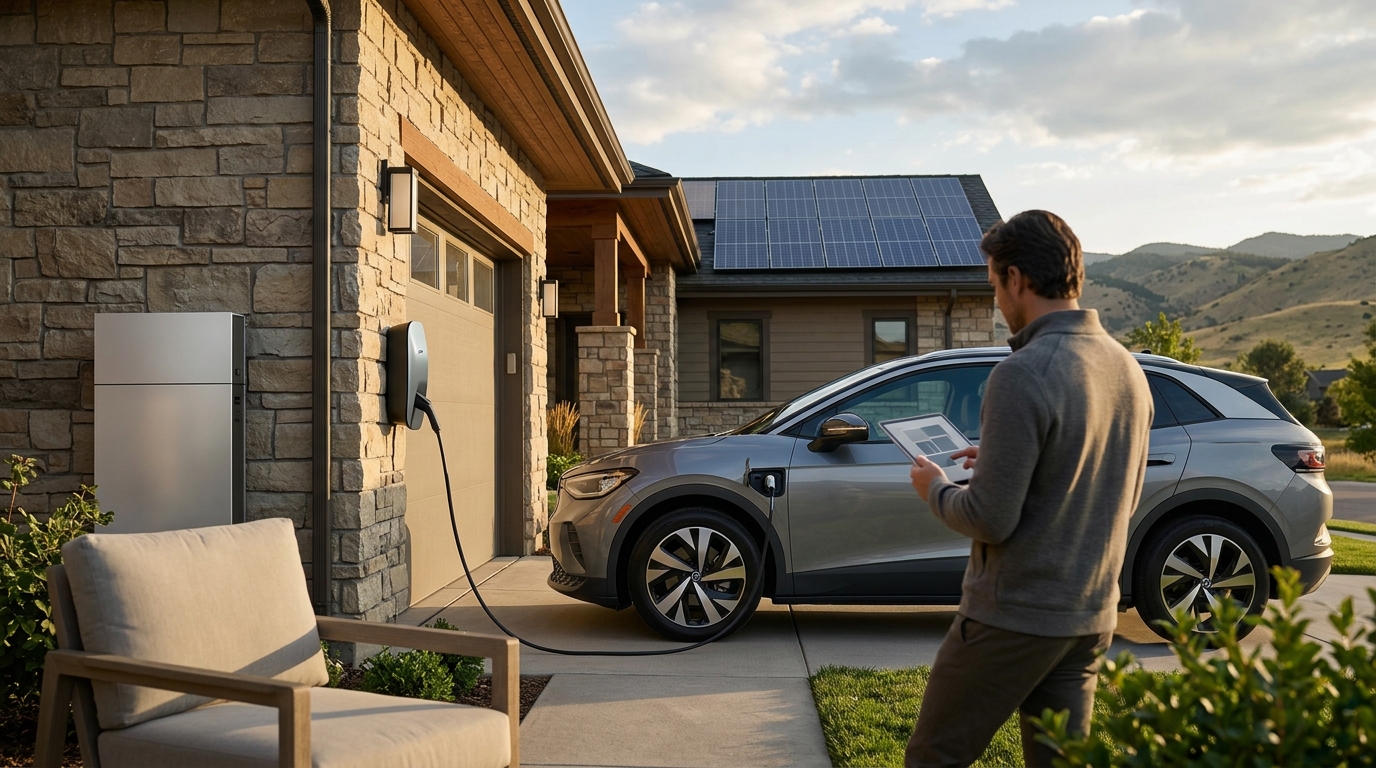
Integrating an electric vehicle (EV) charger and battery storage into an existing solar array is a strategic upgrade that maximizes energy independence. According to the U.S. Department of Energy, residential solar plus storage systems can significantly reduce reliance on the grid during peak pricing hours. This guide outlines the technical and logistical steps to successfully add these components to your home in Colorado.
Step 1: Assess Current Solar Capacity and Roof Health
Before purchasing new hardware, you must evaluate the structural and electrical health of your existing solar installation. Impact Energy performs a comprehensive analysis using satellite imagery to review your property’s layout, roof pitch, and orientation. This initial assessment determines if your current panels can support the additional load of an EV charger without requiring immediate expansion.
If your roof is older than ten years, it is critical to address roofing integrity first. Solar panels can last 25 to 30 years, but your roof may need replacement sooner. Professional roofing services ensure that your solar investment is protected from weather damage and leaks. A compromised roof can lead to costly repairs that might damage solar inverters or mounting hardware.
Additionally, you need to determine if your current inverter is a "hybrid" inverter. Hybrid inverters can manage power flow between solar panels, batteries, and the grid. If you have a standard string inverter, you may need to replace it or add a separate battery inverter to enable storage functionality.
Step 2: Select the Right Battery Storage System
Battery storage allows you to store excess solar energy generated during the day for use at night or during power outages. The most common technology used in residential settings is lithium-ion, which offers high energy density and long cycle life. Home energy storage systems are increasingly popular for their ability to provide backup power during grid failures.
When selecting a battery, consider the following factors:
- Capacity (kWh): Measure your daily energy consumption to determine how much storage you need. A typical home might require 10 to 20 kWh of storage.
- Power Output (kW): This determines how many appliances you can run simultaneously. EV chargers require high power output, so ensure the battery can support this load.
- Depth of Discharge (DoD): This indicates how much of the battery's capacity can be used. A higher DoD means more usable energy.
Impact Energy offers premium solar battery solutions designed to integrate seamlessly with existing solar arrays. These systems are engineered to provide reliable backup power and maximize self-consumption of solar energy.
Step 3: Choose and Install the EV Charger
Choosing the right EV charger depends on your vehicle's charging speed requirements and your electrical panel's capacity. There are two main levels of EV chargers:
Level 1 Chargers
Level 1 chargers use a standard 120-volt household outlet. They are the slowest option, adding about 3 to 5 miles of range per hour. This method is suitable for plug-in hybrids or drivers with very short commutes.
Level 2 Chargers
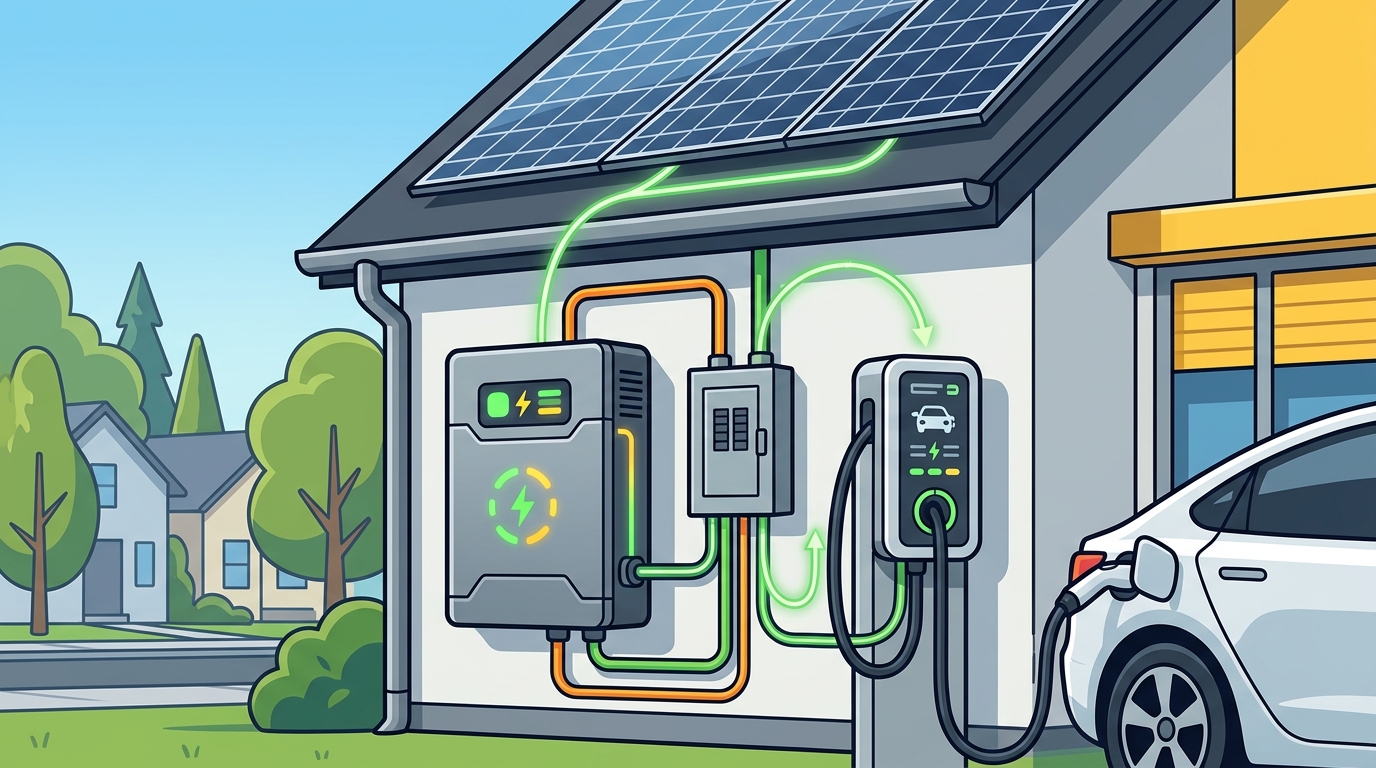
Level 2 chargers require a 240-volt circuit, similar to a large dryer or oven. They can add 25 to 60 miles of range per hour, making them ideal for most EV owners. Professional EV charger installation ensures that the 240-volt circuit is safely wired and up to code.
When installing a Level 2 charger, consider smart charging features. Smart chargers can communicate with your home's energy management system to charge your vehicle when solar production is highest or when electricity rates are lowest. This optimization reduces costs and maximizes the use of clean energy.
Step 4: Electrical Integration and Panel Upgrades
Integrating an EV charger and battery storage often requires upgrades to your home's electrical panel. Older panels may not have the capacity to handle the additional load of an EV charger and battery system. Electrical and HVAC upgrades are frequently necessary to support modern energy systems.
The integration process involves:
- Load Calculation: An electrician performs a detailed load calculation to determine if your panel can handle the new equipment.
- Panel Upgrade: If the load calculation shows insufficient capacity, you may need to upgrade to a 200-amp panel or add a sub-panel.
- Wiring and Connections: Technicians run dedicated circuits from the panel to the battery and EV charger, ensuring all connections are secure and compliant with the National Electrical Code (NEC).
- System Commissioning: The entire system is tested to ensure proper communication between the solar inverter, battery, and EV charger.
Impact Energy handles all aspects of this process, from the initial load calculation to the final commissioning. Our team ensures that your new system operates efficiently and safely, providing peace of mind for years to come.
Step 5: Navigate Incentives and Financing
Adding an EV charger and battery storage can be expensive, but numerous financial incentives can offset the cost. The federal government offers a tax credit for residential clean energy projects, including solar, battery storage, and EV charging infrastructure. Federal tax credits can cover a significant portion of the installation cost.
In Colorado, additional incentives may be available through local utilities and state programs. Colorado solar incentives can further reduce the net cost of your system. Impact Energy also offers flexible financing options to make these upgrades accessible without upfront costs.
Key financial benefits include:
- Federal Investment Tax Credit (ITC): Allows you to deduct a percentage of the cost of installing a solar energy system from your federal taxes.
- Net Metering: Credits you for excess energy sent back to the grid, reducing your monthly bills.
- Utility Rebates: Some local utilities offer rebates for installing energy storage systems.
Step 6: Ongoing Monitoring and Maintenance
Once your system is installed, regular monitoring and maintenance are essential to ensure optimal performance. Most modern solar and battery systems come with mobile apps that allow you to track energy production, consumption, and storage levels in real time.
Regular maintenance tasks include:
- Cleaning Panels: Dust and debris can reduce solar efficiency. Regular cleaning ensures maximum energy production.
- Checking Connections: Ensure all electrical connections are secure and free from corrosion.
- Software Updates: Keep your inverter and battery management system software up to date for improved performance and security.
Impact Energy provides comprehensive maintenance services to keep your system running at peak efficiency. Our team can perform annual inspections to identify and address potential issues before they become costly problems.
Key Takeaways
- Assess your roof health and existing solar capacity before adding new components.
- Choose a battery system with sufficient capacity and power output for your needs.
- Select a Level 2 EV charger for faster charging speeds and better efficiency.
- Upgrade your electrical panel if necessary to support the additional load.
- Leverage federal and state incentives to reduce the overall cost of installation.
- Monitor your system regularly to ensure optimal performance and longevity.
- Work with a reputable installer like Impact Energy for seamless integration and support.
Frequently Asked Questions
Can I add a battery to my existing solar system?
Yes, you can add a battery to an existing solar system if it has a hybrid inverter or if you install a separate battery inverter. Impact Energy can assess your current setup to determine the best integration method.
How much does it cost to add an EV charger?
The cost varies depending on the charger type and installation complexity. A Level 2 charger typically costs between $500 and $2,000 for the unit, plus installation fees. EV charging costs can be minimized by using solar power.
Will adding a battery storage system increase my home's value?
Yes, homes with solar and battery storage systems often have higher resale values. Buyers appreciate the energy savings and backup power capabilities. Solar can increase home resale value significantly.
What is the lifespan of a residential battery?
Most residential batteries last between 10 and 15 years, depending on usage and environmental conditions. Lithium-ion batteries are known for their durability and long cycle life.
Do I need to upgrade my electrical panel?
It depends on the capacity of your current panel. If your panel is old or has low amperage, an upgrade may be necessary to safely support an EV charger and battery system.
How do I monitor my solar and battery system?
Most systems come with a mobile app that provides real-time data on energy production, consumption, and storage. You can also schedule regular monitoring checks with your installer.
Are there tax credits for EV chargers?
Yes, the federal government offers a tax credit for the installation of EV charging equipment. Check the IRS website for current details and eligibility requirements.
Ready to Upgrade Your Home Energy System?
Adding an EV charger and battery storage to your home solar system is a smart investment in energy independence and sustainability. Impact Energy is here to guide you through every step of the process, from initial assessment to final installation. Contact us today to schedule a consultation and start saving.
Contact Impact Energy to get started on your journey to a cleaner, more efficient home.