
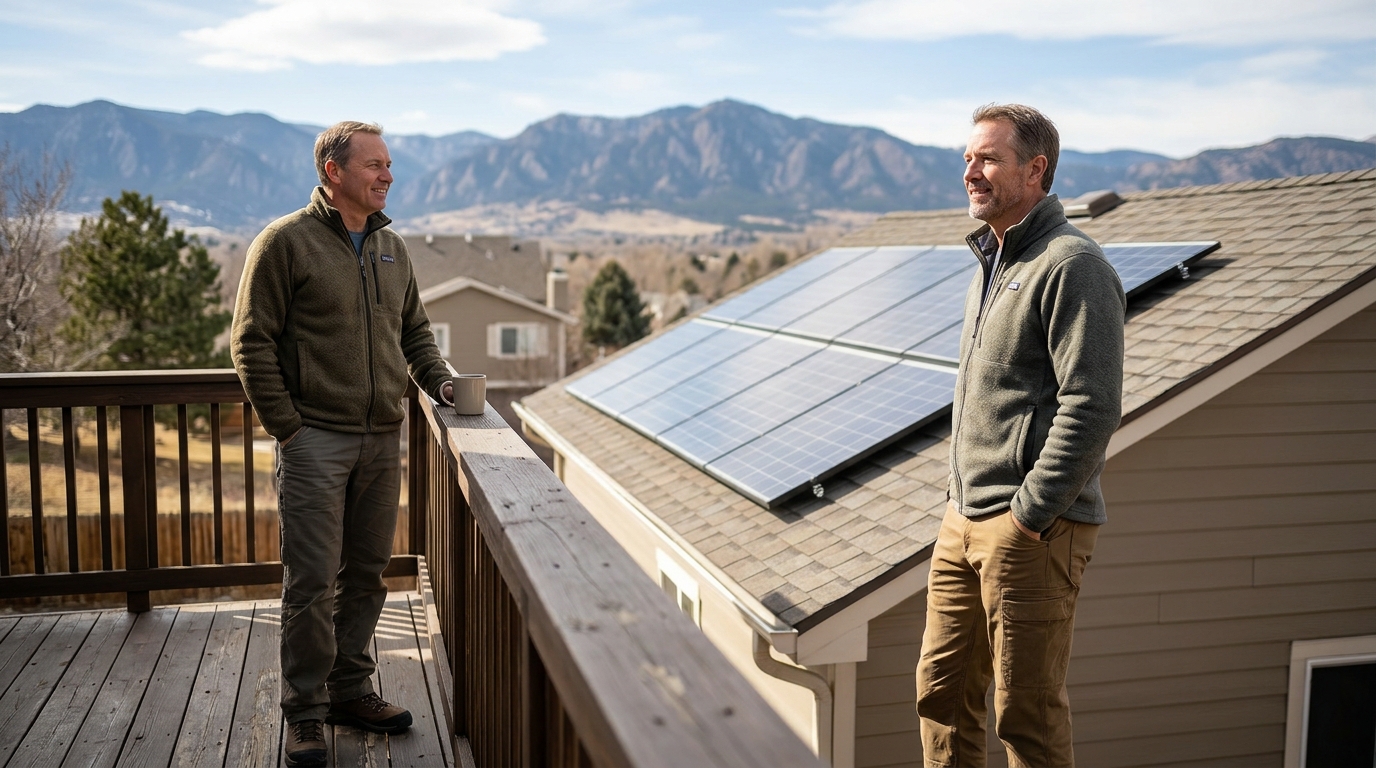
Homeowners in Colorado face a unique set of environmental challenges that make the timing of major home improvements critical. According to recent industry data, installing solar panels on a roof that requires replacement within five years can result in a total loss of investment exceeding $10,000 due to removal and reinstallation costs. This statistic highlights the urgent need for integrated home improvement strategies that address both energy efficiency and structural integrity simultaneously. By coordinating these two projects, you eliminate the risk of future labor markups and ensure your solar array is optimized for the next three decades. (About Us Impact Energy)
Why Combine Solar and Roofing?
The decision to replace a roof and install solar panels is rarely made in isolation. Most homeowners in Centennial, Denver, and surrounding Colorado communities eventually face the reality that their aging roof cannot support new solar infrastructure. Solar panels are designed to last 25 to 30 years. If your roof is only 10 years old, you will likely need to pay for the solar system to be taken down and put back up again before the panels reach the end of their useful life. This process is not only expensive but also disrupts your energy savings for months.
Combining these projects creates a seamless transition for your home. It ensures that the mounting hardware is installed directly onto new, high-quality underlayment and decking. This structural integrity is vital for withstanding Colorado's heavy snow loads and high winds. When you work with a single provider, you avoid the common blame game where a solar installer claims the roof leak is a roofing issue, and the roofer claims the leak is a solar penetration issue. A unified warranty covers the entire envelope of your home.
Impact Energy operates as a full-service provider in Centennial, CO, handling every step from the initial satellite imagery analysis to the final electrical inspection. We do not subcontract any part of the process, which guarantees consistent quality control from the first nail to the last inverter. This approach aligns with the growing trend of holistic home energy upgrades, where structural durability and renewable energy generation are treated as a single ecosystem.
The Integrated Installation Process
Understanding the workflow of a combined solar and roofing project helps homeowners prepare for the construction phase. The process begins with a comprehensive property assessment. Our team uses advanced satellite imagery to review your property’s layout, determining key factors like roof pitch, azimuth, and orientation. This data allows us to assess the suitability of your roof for both new shingles and solar arrays.
Next, we conduct a detailed shade analysis to identify potential obstructions, such as mature trees or neighboring buildings, that could impact sunlight exposure. This calculation determines the Total Solar Resource Fraction (TSRF) for your specific address. Based on these assessments, our engineers design a custom solar system that complements the new roof’s aesthetic and structural capabilities.
Material Selection and Permitting
Once the design is approved, we handle all necessary permitting and building inspections. This is a critical step in Colorado, where local building codes can vary significantly between municipalities like Aurora, Lakewood, and Greeley. Our in-house team manages these regulatory requirements, ensuring that your new roof meets local wind uplift standards and your solar installation complies with the National Electrical Code (NEC).
We offer a selection of premium roofing materials that are compatible with solar mounting systems. Whether you prefer traditional asphalt shingles, metal roofing, or tile, our installers are trained to integrate solar racking systems without compromising the roof’s waterproofing. This integration is often achieved through flashing techniques that seal around the mounting points, preventing leaks that are common in poorly executed DIY or disjointed installations.
Installation and Activation
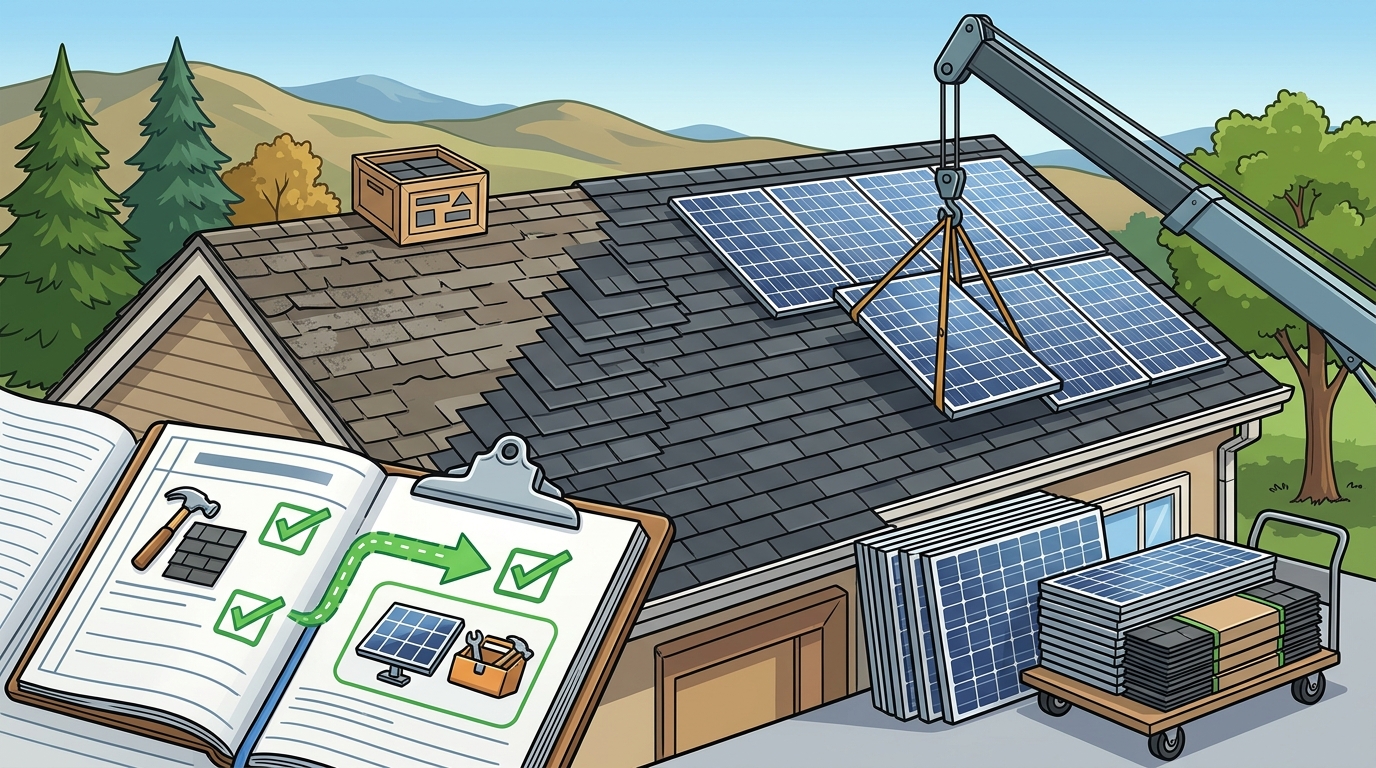
The installation phase typically proceeds in two stages. First, the roofing team removes the old roof and installs the new underlayment and decking. Once the roof is watertight, the solar team begins the racking installation. This sequence ensures that no solar equipment is damaged during the roofing demolition. After the panels are mounted and wired, we conduct a final inspection to verify system performance and roof integrity. Upon approval, we activate your system, allowing you to start generating clean energy immediately.
Financial Incentives and Financing
One of the most compelling reasons to bundle these services is the financial efficiency. While the upfront cost of a combined project is higher than a standalone roof replacement, the long-term value proposition is superior. You are essentially paying for one mobilization, one set of disposal fees, and one period of home disruption. When you hire separate contractors, you pay for mobilization and cleanup twice.
Colorado homeowners have access to significant financial incentives that apply to solar installations. The federal Investment Tax Credit (ITC) allows you to deduct a substantial percentage of your solar system cost from your federal taxes. According to current IRS guidelines, this credit applies to the total cost of the solar equipment and installation, provided the system is placed in service during the tax year. By combining the projects, you can often streamline your financing options.
Impact Energy offers flexible financing solutions, including solar loans and leases, designed to make the transition affordable. Our financing partners work to ensure that your monthly solar savings offset the cost of your loan payments, effectively making the energy generation free while you pay off the roof. This strategy turns a major expense into a wealth-building asset. For more details on available loans, you can visit our Colorado Solar Loans page.
Colorado Climate Considerations
Living in Colorado means dealing with extreme weather variations. The state receives over 300 days of sunshine annually, making it an ideal location for solar energy. However, the same region is prone to heavy snowfall, hail, and high winds. These conditions place immense stress on both roofing materials and solar mounting systems.
A new roof provides the necessary foundation to withstand these forces. High-quality underlayment and impact-resistant shingles or metal panels can protect your home from hail damage, which is a common concern in areas like Denver and Colorado Springs. When solar panels are installed on a new roof, they can actually provide an additional layer of protection for the shingles beneath them, reducing UV degradation and extending the life of the roofing material.
Furthermore, proper ventilation is critical in Colorado’s climate. Our roofing installations include enhanced ventilation systems that prevent ice damming in the winter. Ice dams can cause water to back up under the shingles, leading to interior leaks. By integrating solar with a properly ventilated roof, we ensure that your home remains dry and energy-efficient year-round. For more information on our service areas, check out our Denver solar installation page.
Single Contractor vs. Multiple Vendors
Choosing between a single integrated contractor and separate specialists is a common dilemma for homeowners. The table below outlines the key differences in risk, cost, and convenience.
| Factor | Single Integrated Contractor | Separate Contractors |
|---|---|---|
| Warranty Coverage | Unified warranty for roof and solar | Disjointed warranties; potential gaps |
| Liability for Leaks | Single point of responsibility | Blame shifting between roofers and solar techs |
| Cost Efficiency | Lower total labor and disposal costs | Higher cumulative mobilization fees |
| Scheduling | Coordinated timeline; less disruption | Complex coordination; potential delays |
| Quality Control | Consistent standards across both trades | Varying quality standards between vendors |
The data clearly favors the integrated approach. When you hire a company like Impact Energy, you benefit from our in-house operations. We do not subcontract any part of the process, which translates into a better customer experience and higher quality of work. Our team is trained in both roofing and solar technologies, allowing them to solve complex integration challenges that separate tradespeople might overlook.
Key Takeaways
- Long-Term Savings: Installing solar on a new roof eliminates the need for costly solar removal and reinstallation within the next 10 to 15 years.
- Unified Warranty: A single contractor provides one comprehensive warranty, removing ambiguity regarding leak liability and system performance.
- Colorado Compliance: Integrated installations ensure compliance with local building codes in Centennial, Aurora, and Greeley, particularly regarding wind uplift and snow load.
- Financial Incentives: Federal tax credits apply to the solar portion, while the new roof adds immediate resale value to your home.
- Operational Integrity: Impact Energy handles all permits, inspections, and installations in-house, avoiding the risks of subcontracted labor.
- Climate Resilience: New roofing materials combined with solar mounting systems provide superior protection against Colorado’s hail and snow.
- Seamless Experience: One project timeline means less disruption to your daily life and a faster path to energy independence.
Frequently Asked Questions
Can I install solar panels on a new roof?
Yes, installing solar panels on a new roof is the recommended best practice. It ensures that the mounting hardware is securely attached to fresh decking and underlayment, maximizing the lifespan of both the roof and the solar array.
How long does a combined solar and roof installation take?
The timeline varies based on the size of the roof and the complexity of the solar design. Typically, the roofing portion takes 3 to 5 days, while the solar installation takes an additional 2 to 3 days. The entire process is usually completed within two weeks, excluding permitting and inspection wait times.
What happens if my roof leaks after solar installation?
If you work with a single integrated contractor like Impact Energy, the warranty covers the entire system. We stand behind our work with a ten-year workmanship warranty, ensuring that any issues related to the installation are addressed promptly without dispute.
Does solar installation void my roof warranty?
No, when installed by certified professionals using proper flashing techniques, solar installation does not void your roof warranty. In fact, many roofing manufacturers offer enhanced warranties for systems installed by their certified partners.
Are there specific incentives for Colorado homeowners?
Yes, Colorado homeowners can benefit from the federal Investment Tax Credit (ITC) for solar. Additionally, local utility companies may offer net metering programs that allow you to sell excess power back to the grid. Visit our Incentives page for the latest details.
Can Impact Energy service my area?
Impact Energy serves Centennial, Denver, Aurora, Lakewood, Greeley, and Pueblo. We provide both residential and commercial solar and roofing services across these regions. Check our service areas page for specific coverage details.
How do I finance a combined project?
We offer various financing options, including solar loans and leases. Our team can help you structure a payment plan that aligns with your budget and maximizes your tax benefits. Learn more about our financing options.
Start Your Integrated Home Upgrade
Don’t let the complexity of coordinating multiple home improvements hold you back. By choosing a single, trusted provider for both your roof and solar needs, you secure your home’s future, maximize your financial returns, and enjoy peace of mind. Impact Energy is ready to guide you through every step of the process, from the initial satellite analysis to the final system activation.
Contact us today to schedule your free consultation. Our team is available Monday through Friday from 9:00 am to 5:00 pm. Call us at (888) 240-1131 or visit our contact page to request a detailed proposal for your home.