
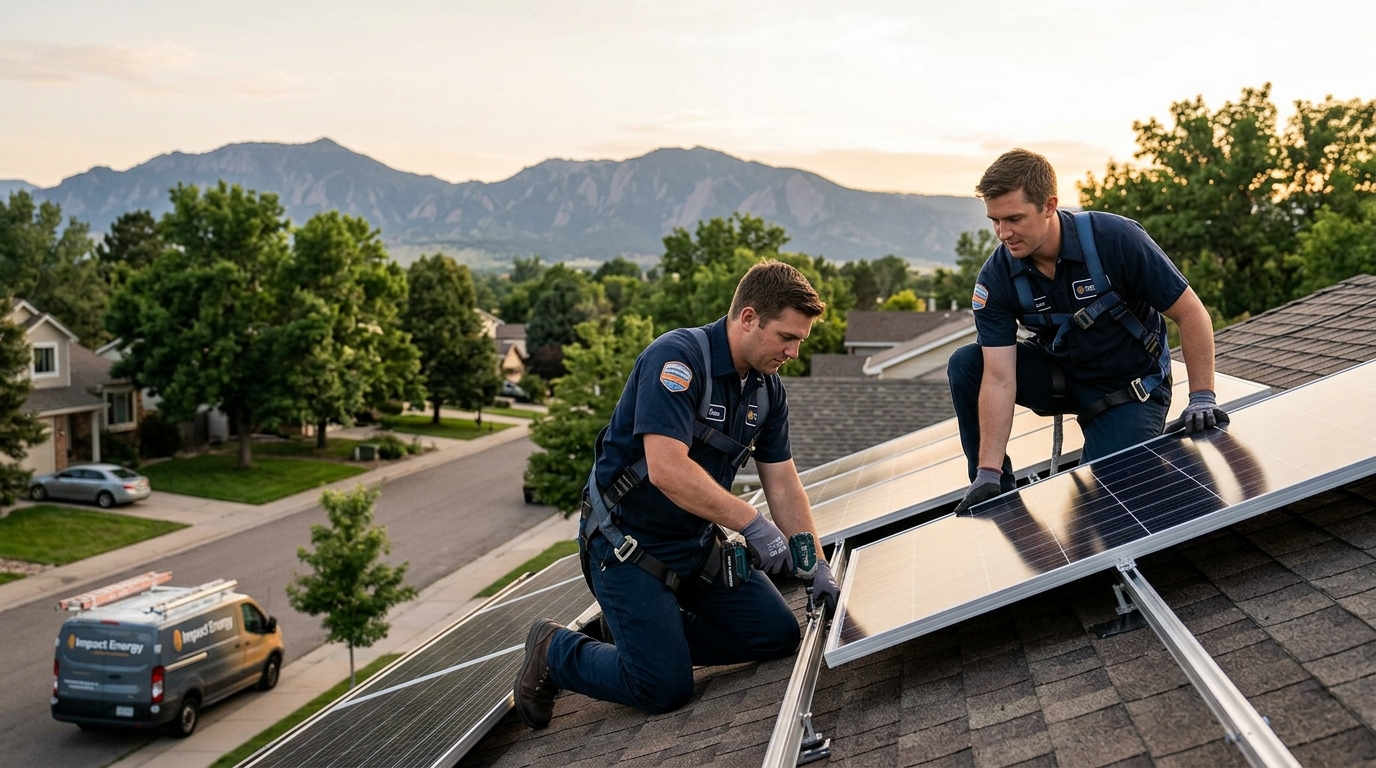
The transition to renewable energy in Colorado is accelerating rapidly. According to recent industry data, the adoption of residential solar systems in the Denver metro area has seen consistent growth, driven by both environmental concerns and the desire for energy independence. However, the speed of this market expansion has introduced a significant variable for homeowners: the quality of the installation workforce. Many large national players rely heavily on third-party labor to scale quickly. This approach often leads to inconsistent workmanship, delayed timelines, and a lack of accountability. For Denver homeowners, finding a company that keeps the entire process in-house is not just a preference. It is a critical strategy for protecting your home’s structural integrity and ensuring long-term system performance. (Contact Us Impact Energy)
Why Subcontracting Impacts Solar Quality
When a solar company subcontracts its installation work, they are essentially acting as a middleman. They sell the system, but they do not control the hands that put it on your roof. This separation creates a chain of liability that often ends with the homeowner bearing the risk. In Denver, where weather conditions can range from intense UV exposure to heavy snow loads, the precision of the mounting and sealing is paramount. A subcontracted crew may not have the same level of training or investment in your specific roof type as a dedicated in-house team. (Expert HVAC Services in)
Furthermore, communication breakdowns are common in subcontracted models. If an issue arises during installation, the installer may not have direct access to the engineering or sales teams that designed your system. This delay can push back your activation date by weeks. In contrast, a company that manages its own workforce ensures that the people designing your system are aligned with the people installing it. This alignment reduces errors and ensures that the system performs exactly as the energy production estimates predicted. (Solar Installation in Denver)
How to Identify Truly In-House Installers
Not all companies that claim to be "local" are truly independent. Some operate as sales franchises while outsourcing the physical labor. To find a Denver solar installer that does not use subcontractors, you must look beyond marketing slogans. You need to verify their operational structure through specific questions and observations. (Blogs Impact Energy)
Ask About Permitting and Inspections
One of the strongest indicators of an in-house operation is how they handle the bureaucratic side of solar. Companies that manage their own installations typically also manage their own permits and building inspections. They have the internal expertise to navigate the specific requirements of Denver and surrounding counties like Arapahoe and Jefferson. If a company hands you a folder of permits to submit yourself, or if they claim to use a third-party "permit expeditor" for every job, they are likely not controlling the full process.
Verify Employee Benefits and Training
In-house installers are employees. They receive benefits, training, and direct supervision. Subcontractors are independent businesses that may be juggling multiple clients across different cities. Ask the company directly: "Do your installers receive ongoing training on the specific panels and inverters you use?" A company with a dedicated training program for its staff is investing in long-term quality. This investment is rarely seen in companies that treat installation as a commodity.
Check for Consistent Branding
Look at the vehicles, uniforms, and safety equipment used by the crew. In-house teams typically wear branded gear and drive company vehicles. This is not just about aesthetics. It signals that the crew is accountable to the company’s reputation. If you see unbranded trucks or workers in generic safety vests, it is a strong sign that the company is using a temporary or third-party labor force.
The Impact Energy Difference
Impact Energy has built its reputation in Centennial and the broader Denver metro area on a strict no-subcontractor policy. This principle is central to their business model. By keeping every step of the process in-house, they ensure that the customer experience remains consistent from the initial savings report to the final system activation. This approach eliminates the friction that often occurs when multiple external parties are involved in a single project.
Impact Energy’s team handles everything from the initial satellite imagery analysis to the final electrical hookup. This includes conducting detailed shade analyses to calculate the Total Solar Resource Fraction (TSRF) for your specific property. By managing the design and installation internally, they can adjust the system layout in real-time to maximize energy production without the delays of coordinating with external engineers. This level of control is particularly valuable in areas like Aurora, Lakewood, and Greeley, where roof orientations and local shading patterns vary significantly.
Additionally, Impact Energy offers a ten-year workmanship warranty. This warranty is backed by the company itself, not an insurance policy tied to a third-party contractor. This means that if any issue arises related to the installation, you have a direct line to the company that performed the work. They stand behind their labor because they employ the people who do it. This accountability provides homeowners with peace of mind that is difficult to find in the broader market.
Installer Models Compared
Understanding the differences between various installer models can help you make a more informed decision. The table below outlines the key distinctions between in-house operators and those who rely on subcontracted labor.
| Feature | In-House Installer (e.g., Impact Energy) | Subcontracted Installer |
|---|---|---|
| Workforce Control | Direct employment, consistent training, and supervision. | Variable crews, potential for high turnover. |
| Permitting | Managed internally by dedicated staff. | Often outsourced or handled by sales agents. |
| Warranty Support | Direct company liability for workmanship. | Complex claims process involving third parties. |
| Communication | Single point of contact throughout the project. | Frequent handoffs between sales, engineering, and labor. |
| Quality Assurance | Standardized processes across all jobs. | Dependent on the individual subcontractor’s standards. |
Key Takeaways
- Direct Accountability: In-house installers provide a single point of contact, reducing communication errors and ensuring that the company stands behind its work.
- Consistent Quality: Employees who are trained specifically on the company’s equipment and processes deliver higher quality installations than temporary crews.
- Streamlined Permitting: Companies like Impact Energy manage their own permits and inspections, speeding up the approval process in Denver and surrounding areas.
- Stronger Warranties: A ten-year workmanship warranty is more reliable when backed by the company that performed the labor, rather than a third-party insurer.
- Local Expertise: In-house teams serving Centennial, Aurora, and Greeley have deep knowledge of local roof types and weather challenges.
- No Hidden Costs: Avoiding subcontractors eliminates the markup that middlemen add to the final price of your system.
- Long-Term Support: Direct employment of installers ensures that the same team that installs your system is available for future maintenance and repairs.
Frequently Asked Questions
What is the definition of an in-house solar installer?
An in-house solar installer is a company that employs its own sales, design, permitting, and installation teams. They do not outsource the physical labor or the core operational processes to third-party contractors. This structure allows for greater control over quality and customer service.
Why is avoiding subcontractors important for roof integrity?
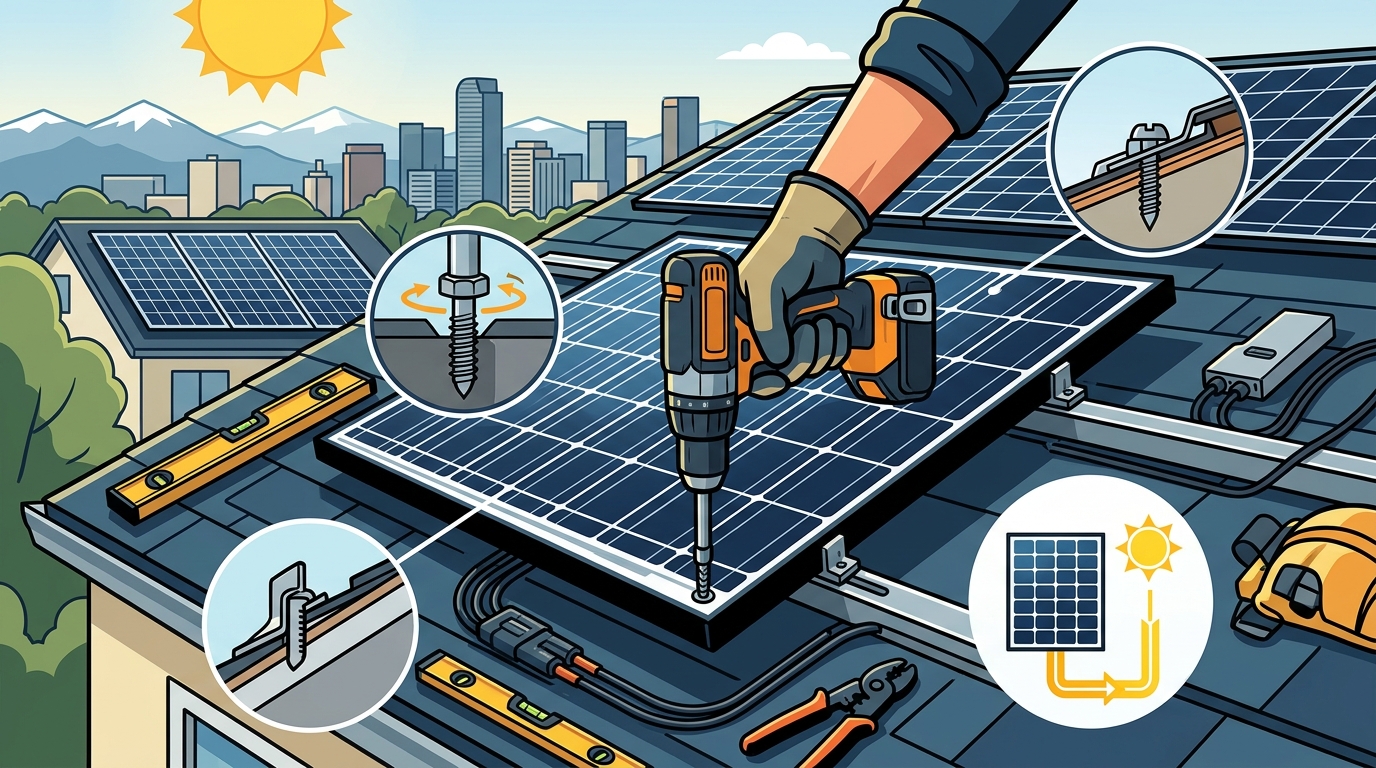
Roof penetrations for solar mounts must be sealed with extreme precision to prevent leaks. In-house installers are trained specifically on the company’s sealing protocols and use consistent materials. Subcontractors may use varying techniques, increasing the risk of water intrusion and roof damage over time.
How does Impact Energy handle permits in Denver?
Impact Energy manages all permitting and inspection coordination internally. Their dedicated team handles the paperwork with local municipalities, ensuring that all requirements are met before installation begins. This eliminates the need for homeowners to navigate complex bureaucratic processes themselves.
What warranty does Impact Energy offer for workmanship?
Impact Energy provides a ten-year workmanship warranty. This warranty covers any issues related to the installation process, such as mounting, wiring, or sealing. It is backed directly by the company, ensuring that you have recourse if any problems arise.
Does Impact Energy serve areas outside of Centennial?
Yes, Impact Energy serves the entire Denver metro area, including Aurora, Lakewood, Greeley, and Pueblo. Their in-house teams are equipped to handle the specific needs of each community, from roof types to local incentive programs.
Can I get a custom solar design without subcontractors?
Absolutely. Impact Energy uses satellite imagery and shade analysis to create custom designs for each property. Because their design and installation teams are in the same company, the design is tailored to be easily and accurately installed by their own crew.
What are the benefits of no upfront cost solar?
No upfront cost options, such as solar loans or leases, allow homeowners to install solar systems without significant initial capital. This makes it easier to start saving on electricity bills immediately. Impact Energy offers transparent financing options that align with your budget.
Start Your Solar Journey
Choosing the right solar installer is one of the most important decisions you will make for your home. By prioritizing companies that keep their operations in-house, you ensure quality, accountability, and long-term performance. Impact Energy is ready to help you switch to clean energy with confidence. Contact us today to schedule your free savings report and see how our in-house team can deliver a superior solar experience for your Denver-area home.